
This article is more than 6 months old
Cambridge MP visits cystic fibrosis researcher
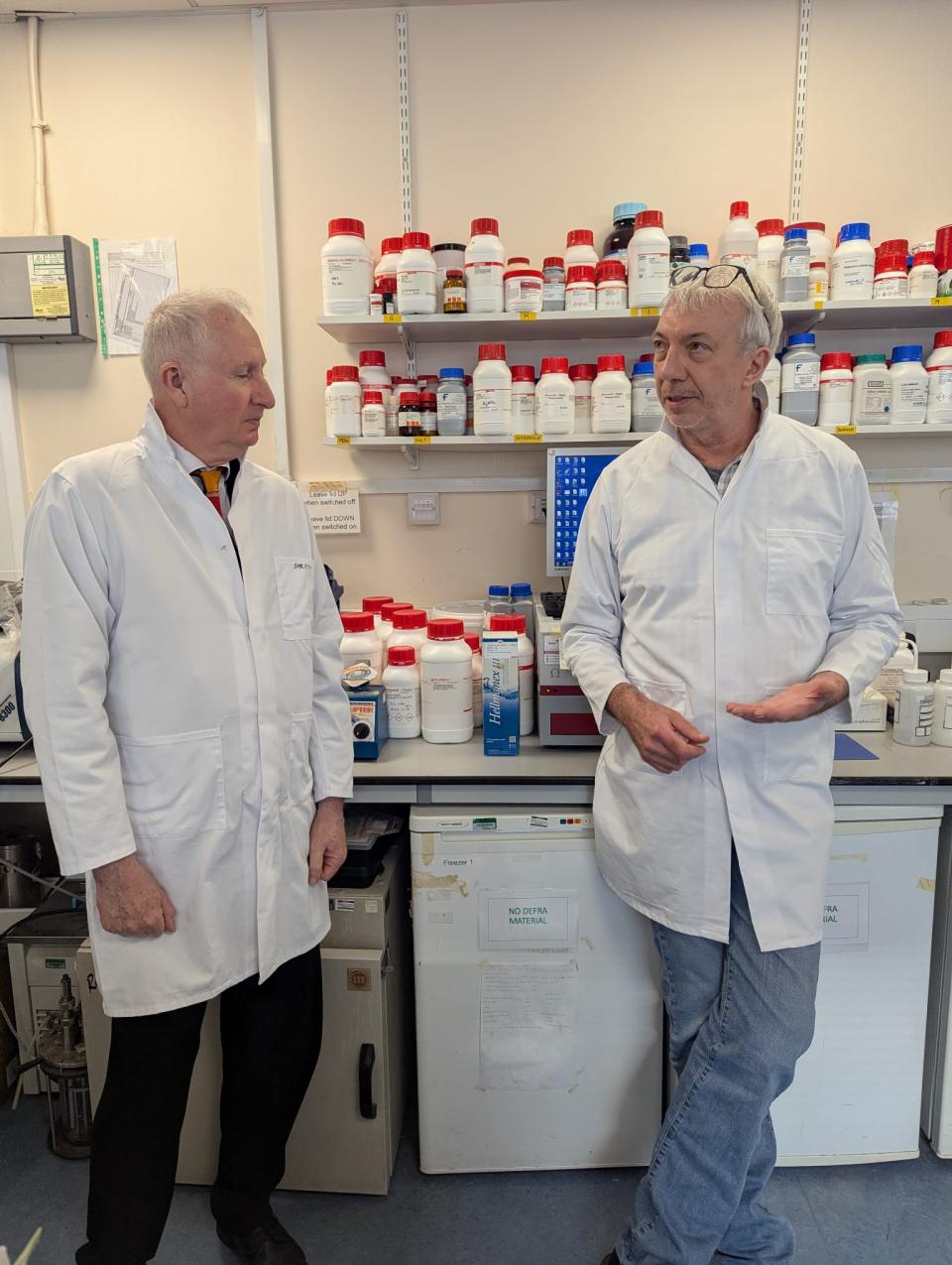
Daniel Zeichner, MP, came to see Professor Welch’s work to improve treatments for CF lung infections, by understanding more about infection-causing bacteria and fungi. People with CF are at a high risk of developing lung infections, because of the thick sticky mucus in their lungs. These infections can cause breathlessness and difficulty breathing. They can also cause major disruptions to day-to-day life and may lead to permanent lung damage.
Pseudomonas aeruginosa is the most common lung infection for adults with CF, and though it can be cleared or controlled if detected early, it can become antibiotic-resistant and develop into a long-term infection. Antibiotic-resistant strains of P. aeruginosa are a World Health Organisation (WHO) priority 1 pathogen, which means it poses one of the greatest threats to human health, and is in urgent need of new antibiotics and treatments.
The MP had a lab tour from Professor Welch and heard from Cystic Fibrosis Trust about the impact lung damage has on people with CF, and the need for more research to detect and treat infections.
It’s a privilege to see the incredible research happening here in Cambridge to tackle cystic fibrosis lung infections. Meeting the scientists and seeing their work up close underlines just how important research is in developing better treatments and improving quality of life for people living with this condition.
Daniel Zeichner, MP for Cambridge
Cystic Fibrosis Trust’s Venture and Innovation Awards (VIAs) are matched funding grants that allow CF researchers to take advantage of new opportunities and exploit new methods in CF research. A VIA award to Professor Welch, co-funded by the University of Cambridge, is supporting Jemima Swain’s PhD studies. The aim of her research is to understand more about how different bugs that cause CF lung infections affect each other.
We know that many people with CF live with long term lung infections, like Pseudomonas aeruginosa and we desperately need better, more effective ways to treat them. We hope research in this area will make a real difference in improving the lives of everyone with CF.
Professor Welch