
Translational Innovation Hub Network for CF Lung Health & Infection
A collaborative £15 million network of Translational Innovation Hubs aims to address key challenges around managing lung health and infection in cystic fibrosis funded in partnership by Cystic Fibrosis Trust and LifeArc. The network is made up of four Innovation Hubs, led by the Universities of Cambridge, Liverpool, Manchester and Imperial College London, as well as partners across the UK and overseas from late 2024 to 2029.
Guided by insights and experiences of people with cystic fibrosis, the new CF Innovation Hubs will address new ways to detect, diagnose, treat and manage lung infections and lung health and help to overcome some of the barriers that can prevent scientists from turning their discoveries into real outcomes for patients.

What are the Innovation Hubs researching?
-
Cambridge

Led by Professor Andres Floto, researchers will use cutting edge methods including AI to analyse the very earliest signs of a flare up of infections (an exacerbation) and predict the best antibiotic combination to treat them. The hope is to eventually create a test that can be used by people with CF at home to decide how and when to treat infections.
-
Imperial College London

Led by Professor Jane Davies, this Hub will bring together microbiologists, healthcare professionals, breath scientists, cell and animal biologists, physiotherapists and even sniffer dogs to detect the germs that are often present in the lungs of people with cystic fibrosis and understand how these bugs are affected by other bacteria and fungi. The aim will be to develop predictive tests for lung infections to inform doctors about the best way to treat them.
-
Liverpool

Led by Professor Jo Fothergill, scientists will develop the use of naturally occurring bacteria-killing viruses called ‘phages’ to treat infections. You can read more about this here.
This ‘phage therapy’ aims to provide an alternative way of treating infections and reduce the negative effects of antibiotics, including antibiotic resistance. The Innovation Hub will also use cutting-edge technology to find the bugs that cause lung exacerbations, which will pave the way for other new treatment approaches in the future.
-
Manchester
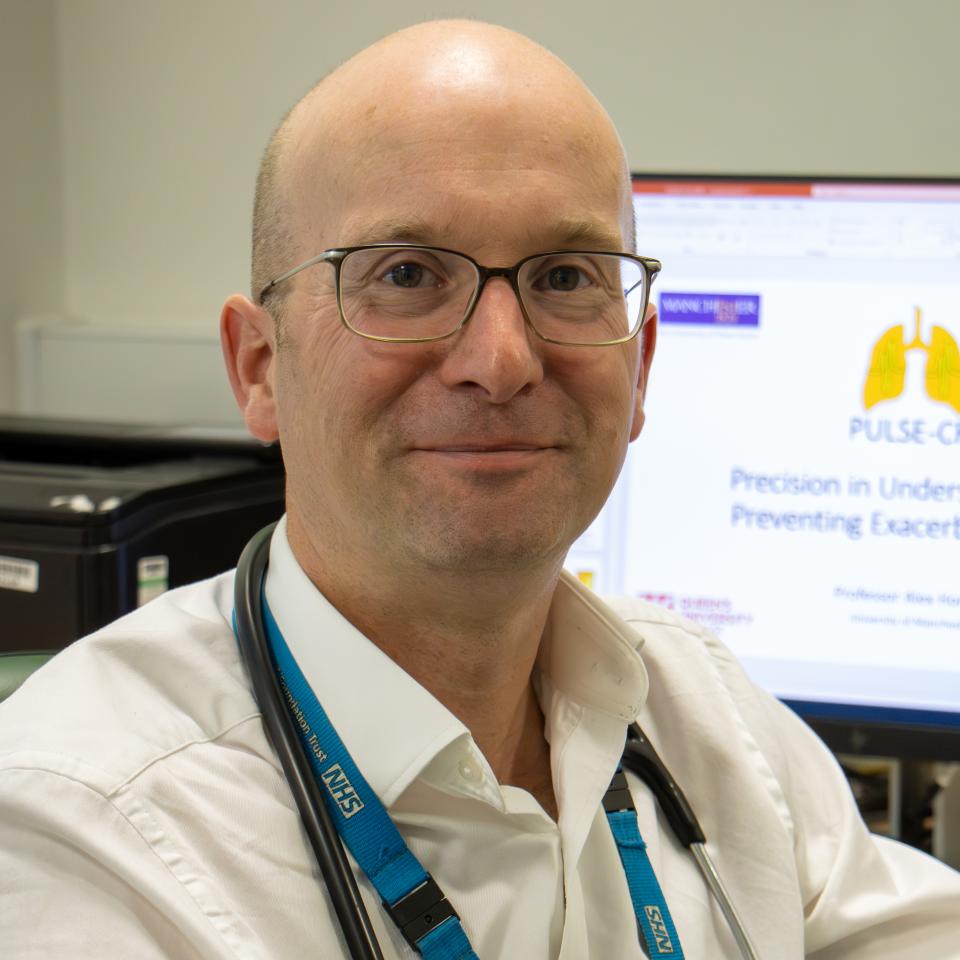
Led by Professor Alex Horsley, this Hub will study the cause of ‘flare-ups’ of infection (exacerbations) for people with cystic fibrosis in a different way. They will analyse blood, saliva, sputum and sweat samples from patients, gather lung function test results, record symptoms via an app and monitor pollution in homes. People with CF will play an important part in studying what triggers these flare-ups and who is most affected.
Researchers will also look at why individual people with cystic fibrosis sometimes respond in different ways to IV treatments for flare ups, so that they can understand who will respond best to antibiotics and why. This research will hopefully lead to clinical trials testing ways to prevent these flare ups in the future.
More about the Translational Innovation Hub Network
-
Mission and vision
The mission of the Translational Innovation Hub Network for Lung Health and Infection is to improve the lung health of people with cystic fibrosis. The new Translational Innovation Hub Network is expected to launch in late 2024, and will build on the success of the first CF Innovation Hub based at the University of Cambridge.
Our vision is to fund a collection of Translational Innovation Hubs that take a collaborative and patient-centred approach to move forward innovation to improve the lung health of people with CF.
-
Background
LifeArc and Cystic Fibrosis Trust have come together in a £15 million partnership to fund a Network of Translational Innovation Hubs to advance the development of solutions and interventions in lung health and infection for people living with CF. The Translational Innovation Hub Network will consist of several Innovation Hubs that will develop translational research programmes across institutions, to drive forward scientific research that will benefit people with CF.
Each Translational Innovation Hub will be awarded up to £5 million over 5 years, to address major challenges in managing lung health and infections in CF. The Translational Innovation Hubs will work to overcome key obstacles in improving outcomes for people living with CF and will have CF community insights and perspectives embedded throughout.