This article is more than 1 year old
How do we decide what research to fund? Understanding the community role in our Research Grants Review Committee
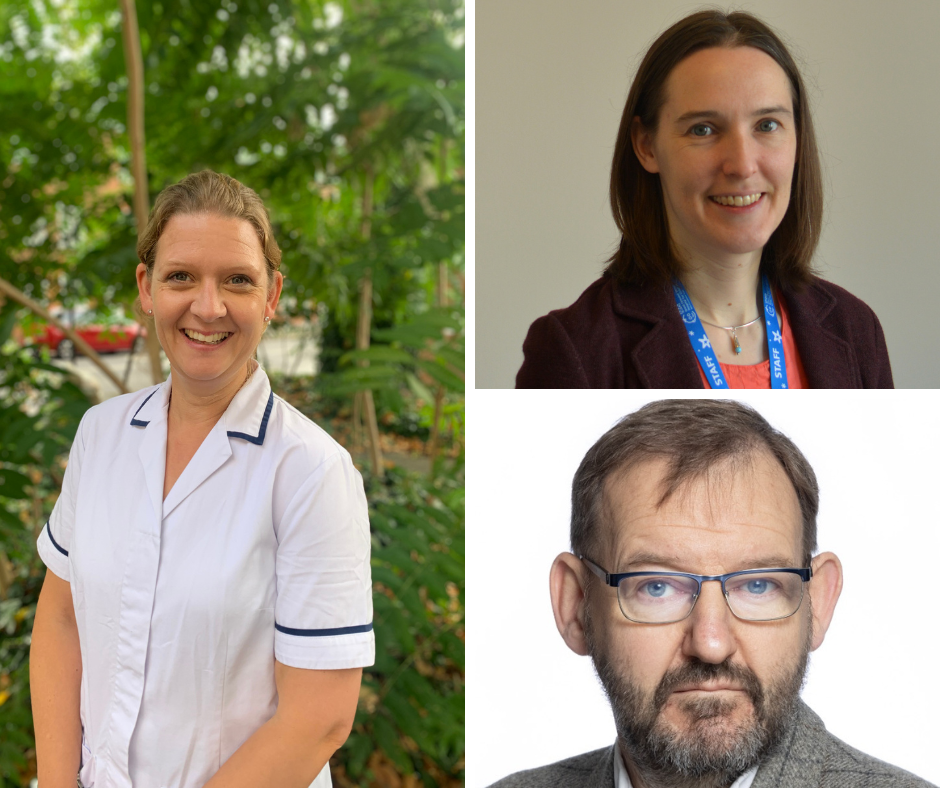 We were kindly joined by:
- Professor Patrick (Paddy) Harrison - a researcher specialising in CF gene editing and gene therapy, who has been part of the RGRC for four years.
- Dr Gwyneth Davies - a CF paediatrician and researcher, who has joined the RGRC recently.
- Dr Gemma Stanford - a specialist CF physiotherapist who has been part of the RGRC for two years.
What is so important about having people from the CF community as part of the RGRC?
Gemma: They’re the voice of reason. The people that turn around and go “however perfect that trial is, it is never going to work because you're asking us to do something that we don't want to do.” They have those real important insights into what actually is important in CF life, and you can't beat that.
Gwyneth: People from the CF community that are on the committee bring the best and most relevant questions - the questions that really make you think as a committee. They have a voice that can't be replaced, so they're an integral part of this.
Paddy: I'm at the basic science level, and science can be slow, but hearing from the CF community keeps it urgent. In our experiments, we've got lots to do but the CF community are like “we need this now”. It helps you keep the balance of we can't rush the experiment because we're testing a hypothesis and we can't pre-decide what the answer is going to be, because that's not science - but we can't just sit around and take forever. We've got to move this forward. Speaking to the CF community helps to remember why we're doing this. It keeps it real.
What do you value most about the contributions of the CF community members? And does it make you see things from a different perspective?
Gwyneth: It's really good to have more than one voice from the CF community because I know people with CF that join these types of initiatives feel they've got quite a big burden on their shoulders to try and represent the whole community. Having a few voices in the room that can give different experiences of living with CF is really important because we know that those experiences can be so different for different people.
Gemma: It's just appreciating the real people behind what we're trying to do, what the research is trying to do, and how they feel about it. I think those voices are very strong and I definitely value the questions that come from those reviewers, because they can really go through the practicalities and time scales of things. For example, will it be 20 years before it's something I can use? Just bringing it back to what's important.
What do you think people from the CF community can gain from being part of the RGRC?
Gemma: They will gain that feeling that the Trust, CF researchers and clinicians are listening and are keen to hear people’s experiences and tailor research to those experiences. And then, the same as everybody else on the committee, it's gaining that learning about where research is going and what research is out there.
Paddy: Hope is one of the words which we've not mentioned. So many people are spending so much of their time and effort to try and come up with new treatments. A lot of these people might see breakthroughs in other diseases and they'll go “oh, we could use that for CF”. If you're on this committee, you're learning about all of these things, so I think hope is what you would gain from being on this committee.
What kind of time commitment is involved?
Gemma: Reviewing applications before a committee meeting can take around half a day. You usually get one or two that you're the lead reviewer on - to really go through with a fine comb and make sure that you really understand the project. The others you can read through in less detail.
Twice a year we will sit down as a committee and discuss applications and their merits and review the progress reports on current grants. There are also adhoc requests throughout the year as well.
Is there anything else you’d like to say to someone from the CF community who is thinking of joining the RGRC?
Gwyneth: I’d give people some reassurance that you're not being asked to be an expert in the underlying science or the best way to deliver a clinical trial or anything like that. You're there to give your own experience, or your family's experience, of CF, and that’s the voice that we as researchers need to hear. They shouldn't be daunted by the name ‘Research Grants Review Committee’! It can sound a bit scary or off putting to some people, but you're not there to be a scientific voice. You're there to be the expert by experience and that's what it's all about.
We currently have spaces on the RGRC for a CF community representative, if you would like to find out more about this, please email us at [email protected]. We would love to hear from you!

Our e-newsletter
Be the first to hear about the latest CF research breakthroughs, stories from our community and how you can unite for a life unlimited with us.