
This article is more than 4 years old
“There’s always joy to be found”: Salt in My Soul
Salt in My Soul is described as a coming-of-age story about choosing to live mindfully and joyously in the face of immense struggle. What do you think others can learn from Mallory and her journey?
There are so many things people can learn from Mallory’s journey. The most important is that we do have inner strength. We don't always know how to tap into it. But she lived with debilitating disease and accomplished so much. And now I live with catastrophic loss but keep going. CF patients and their families are resilient and don't give up, we keep fighting.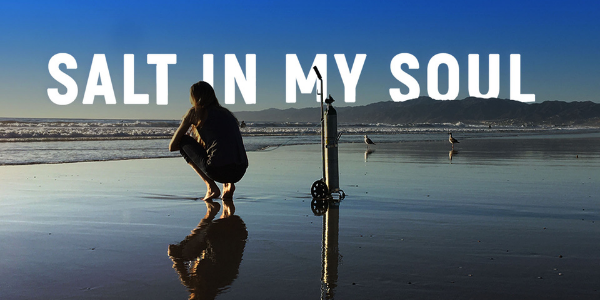
There are other messages, like “live happy”; there's joy to find in every day. Sometimes it's a good cup of coffee… sometimes a trip to Europe… sometimes a nice hot shower at home after a hospitalisation. There are lots of moments you can seize and find joy in. That’s really important.
What did it feel like to create Salt in My Soul? What did it feel like to see it? What have others shared that they take away from viewing it?
It's been so amazing to introduce Mallory to the world but it’s also bittersweet. That she’s not here to understand her impact is what’s hardest to accept. She was extraordinary. People initially got to know her through the book, Salt in My Soul, and I've received feedback from all over the world about how insightful and articulate she was. And from the CF population, how she was able to explain what it is that they’re struggling with and put into words what their life experience is like. And then to see her on the screen, they said, was really an amazing gift.
For me, it keeps her alive and allows others to meet her and enables her legacy to live on. We're using the film to raise money and awareness for antimicrobial resistance and for phage therapy, and for the need for patients to speak up and have their voices be heard.
Where do the proceeds from the film go?
We're raising funds through an organisation called the California Community Foundation because we want to be able to direct the money to specific researchers, labs, and trials. We've been very carefully giving our money to researchers who are doing work to help people with CF battle these resistant infections but AMR (antimicrobial resistance, which leads to superbugs) is now an urgent global health crisis, which makes it easier to raise money since so many are affected. But NO population more so than CF.
We’re working with the University of Leicester, for example, where they have a phage therapy programme. The film draws a lot of attention to phage therapy. It isn't necessarily a miracle cure, but anecdotally we’ve seen that it's worthy of study and worthy of funding. And while we wait for the clinical trials to come to pass, we need to do compassionate use cases, because that's where you learn. That's the only hope for some patients, and some patients are living longer because they've received it.
Our campaign is about the fact that many people don’t really understand or have even heard of CF if they haven’t got a close experience of it themselves. We’re using the common experience of COVID-19 to demonstrate to people what it’s like to live with CF, and using that to start conversations about CF. What is your experience of others’ reactions to the condition?
There's the reaction from people who don't know what CF is – that they didn’t have any idea about the havoc the disease wreaked. But more important to the CF population is the fact that close friends and family don't understand the depth of suffering. Far beyond the pills and the treatments and all the distancing and the protocols - the emotional impact and the emotional toll that this disease takes on people is unfathomable. I know this first-hand because Mallory's friends, when they first read the book, were hysterically crying because they said they did not understand how difficult this disease was. Or how hard life was for Mallory behind closed doors. You can tell people, we do this, we do that. But until you read Mallory’s words or hear somebody talk about it in that level of detail, it’s hard to comprehend. Those who have lost a loved one to COVID-19 will understand the pain and suffering but most often that is an acute problem, not a lifelong one like with CF.
I think the reason the film and the book are important for the CF population is because they provide a way for friends and family to understand the disease and its ramifications. It's almost easier than a person talking about because no one wants to come across as demanding or needy or in search of pity. Mallory’s story says quite simply, don't ignore this disease or us. Don't ignore what it's doing to the family. Pay attention and dig a little deeper. And in the film, Maya, one of her friends, says it was easy to ignore since Mallory didn’t share her suffering. From my understanding, there hasn’t been a book that so articulately describes what living with CF is like.
What do you believe is the importance of raising awareness of CF?
Several things. To address the mental health aspects. To understand how to interact safely with people with CF. To bring antimicrobial resistance to mainstream attention. Mallory didn’t die of CF – she died of a superbug that, because of having CF, she was more susceptible to.
The Lancet just came out with a study that says one person every three seconds will die from a superbug by 2050 if we don't get better treatments. No one should have to suffer what she lived with and died from.
Anybody that goes to a hospital can pick up a hospital-acquired infection, whether you have a knee replacement or an appendectomy or if you're having your tonsils taken out. Using Salt in My Soul and the fundraising, we are trying to make the case that AMR is relevant to everyone, and that makes them much more likely to give.
So, there's kind of a parallel there between how the common experience of COVID-19 has demonstrated to people what it's like to live with CF and how AMR can affect anyone.
There's one other thing that we haven't talked about, and that’s quarantine. Quarantine is really debilitating to people's psychological health. Well, that underscores the point, because so many times CF patients can't participate in things with other people, so they're isolated and they have to quarantine. And that, as a result, affects their mental health.
The difference with COVID-19 is that people tend to recover, and they get to go back to their lives, and people with CF don't.
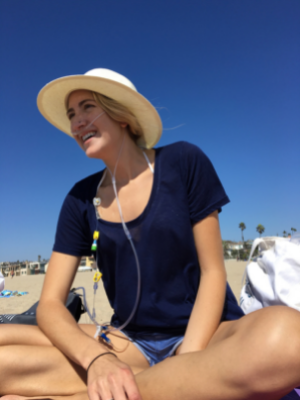 I read that Mallory trusted only you to read her unedited diary. Can you tell us a bit about how it felt to read it?
Oh, wow. I still reread it all the time because it describes our life in detail, and it allows me to relive so much of our life together. She chronicled the important stuff, but she also wrote about the small stuff.
In the beginning, I used to read it and cry. Every day for months and months and months. And it was the process that allowed me to grieve. And now I read it and I'm sad, but I smile at times because it brings back those memories that otherwise might be starting to fade. That's the worst and weirdest part about losing somebody that you're so close to – that you need to distance yourself a little bit to survive. In the beginning you're gasping for breath, in shock that the person's not there. And then over time, you get used to living without them. And then you have that guilt that you're getting used to living without them or starting to forget them. And that feels terrible, too. I'm in a grief group with other moms, so I know that I speak for others.
For me, having that journal enables me to keep her present and I get to be with her. And the film does the same thing, which is so good for me. And from what everybody in every walk of life tells me - whether it's high schools, hospitals, women's luncheons – is that the book and the film make them want to go home and hug their children, their mums…it makes them appreciate what they have. And serves as a reminder that we must take every day as a gift, no matter how sick we are. If you still have breath, you still have hope.
In the same vein, could you tell us a bit about Mallory's legacy as she's been immortalised in the book and the film?
Well, she would have rolled her eyes at all this because she didn't think she was special. Everybody who knew her knew she was special, but she didn't think so. Not everybody's going to have a film, or a book made about them. But everybody has a legacy to leave.
Legacy can be in the recipes you leave, the money you donate, the volunteer work you do. I hope Mallory’s story inspires people to think about their legacy…what they want to do with their time and what they want to leave behind.
I have been inspired by Mallory to try to move the needle with AMR and specifically phage therapy along with cystic fibrosis awareness and the emotional toll that living with the chronic illness takes. I want people to understand that invisible and visible illness, disability, mental health – these are issues that everybody needs to pay attention to. Narrative Medicine is now an area of interest because storytelling is a wonderful way to improve health outcomes.
What has the reaction to the film been from the CF community? Not just in America, but across the world?
Unbelievable, it’s surpassed my wildest expectations. The film has reached an exponentially larger audience than the book. Even though I've been giving book talks for three years at hospitals and health care facilities and colleges and high schools and women's clubs and businesses…. And now the two-minute trailer has spread wildly across the world and people are watching the film. I'm hearing from people from all over, which is quite remarkable and rewarding.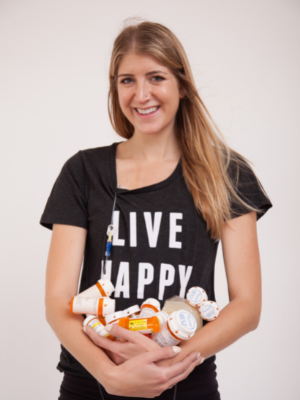
How would you describe your CF Truth? How would you describe Mallory’s?
The truth is that losing someone to CF is the single most catastrophic thing that can happen to you. And to that end, I preach, carpe diem. If you have your loved one, do not squander a day or an hour because you are very lucky. I would say, think long and hard about what you want your life to be about. And work to achieve that, whatever it is.
Mallory describes her truth in the book: “I feel like people with CF are privy to secrets it takes most other people a lifetime to understand. How lucky we are to be alive. How lucky anyone is who has their health. How we should be appreciative of anything that’s in our control since our health is not. That we can leave behind a legacy when we go that will impact others. That simple things are often the most beautiful. That love and happiness are the most important things to strive for. That ultimately, we shouldn’t give a damn what other people think, because everyone’s making their own way and everyone’s facing different struggles that others aren’t aware of. CF has given me my value system and ultimately, no matter how hard it is, I’m grateful for it.”
Salt in My Soul tells the story of Mallory Smith, author of the posthumously published memoir of the same name. Salt in My Soul is now streaming on Apple TV, Amazon Prime, Google Play and more.
Cystic fibrosis (CF) is a genetic condition which causes sticky mucus to build up in the lungs and digestive system. Over 10,800 people in the UK are living with cystic fibrosis (CF), but the condition is still widely misunderstood.
The COVID-19 pandemic has made common many of the everyday experiences of the CF community. The sacrifices made. The distances kept. The milestones missed.
But while many people now look forward to a return to normality as restrictions lift, the effects of the pandemic are not over for all of us. Those with cystic fibrosis must go on experiencing them, every day.
Because we were coughing before it went viral.

Break the ice with #CFTruths
Help others understand what everyday life is like for people with CF.