
This article is more than 4 years old
“When an experiment works, you just can't describe how exhilarating that feeling is”: FeBREWary stories from the lab

How long have you been working in CF research?
David: After working on similar proteins in the 1980s, I started studying variants of the CFTR protein that causes CF in the early 1990s! I’ve continued to study them ever since.
Diana: I'm fairly new to the CF area, I started my PhD studies funded by this SRC about five months ago. I got hooked on this area of research during my undergraduate studies. I'm pleased to have the opportunity to work on CF and understand the CFTR protein.
How do you study the CFTR protein?
David: When I was doing experiments, I studied the changes in how the CFTR protein was working in real time, by measuring the electrical current as ions flow through the ‘gate’ of the protein. It’s a difficult technique that requires a lot of patience. But when you get the data, the experience of seeing channels open and close and seeing new things - you just can't describe how exhilarating that feeling is!
If you're not doing these experiments day in, day out, you just lose the knack. If I go into the lab now, my colleagues want me out of there as quickly as possible!
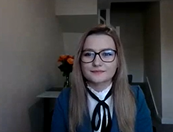
Diana: At the moment, I spend long hours in front of a computer, not in the lab. I'm using computing to look at how potential medicines change the shape of the CFTR protein. The computer calculates the position of every atom in the protein which is mind-blowing!
Proteins don’t stay still – they move really fast! I’m studying how the protein moves within 100 nanoseconds (one nanosecond is billionth of a second). The CFTR protein is really big, so running simulations of how it moves takes a lot of computing power.
After I have finished studying the shape of the CFTR protein, I will examine how CFTR works using electrical methods to confirm my computer results.
What impact will this SRC research have?
David: For a very long time we could study whether the CFTR protein was working or not, but we had to speculate about what its shape or its ‘structure’ was. It is important to look at how the shape of the proteins made from faulty CFTR genes affects their function. Now we have information on how the proteins are working and their structure, we can start to link the two together and understand more about what is causing CF. We are working with colleagues across Europe in this SRC and we’re incredibly grateful to the Trust for the funding.
Do you listen to anything while you’re working?
Diana: No, I enjoy the quiet. I like to hear myself think!
David: I cannot listen to music in the lab. It’s partly because it is just too distracting and also because I learned the hard way that it interferes with data collection!
That sounds like a story...
David: Now we record the lab data directly to the computer, but from the 1980s until early 2000s, the data from my experiments would be recorded onto VHS tapes.
I was working late one night in the lab with some music on. When I played the VHS tape back the next day, I found out I had managed to record Moscow Radio Chile as well as my data! Rather than being cross, my supervisor was just over the moon, as he was from Chile and it brought back happy memories. I was extremely embarrassed and never played music in the lab again!
How do you like to unwind after a long day at work?
David: Running experiments I could burn the candle at both ends for a while, and then I would just crash. My days are not as long now – they’re mostly spent writing, and I need sleep in order to write. So at the end of the day, it is basically just eat and go to bed.
Diana: I like to read and I also like to paint. At the moment I’m using gouache paint. I like it because even after it dries, I can go back and fix my mistakes!
Tea or coffee?
Diana: I'm experimenting with the Superblend tea from Twinings and today I'm drinking immune support, which has lots of berries in it – in my cat mug.
David: This afternoon it’s a ‘bucket’ of strong black tea, no milk and no sugar. In the morning it will be coffee.
Cystic fibrosis (CF) is a genetic condition which causes sticky mucus to build up in the lungs and digestive system. It affects more than 10,800 people in the UK. One in 25 of us carries the faulty gene that causes it, usually without knowing.
Your donations help us fund vital research. Donate today to help everyone with CF live a life unlimited.