
This article is more than 3 years old
Jade's top tips on dealing with an inpatient hospital stay
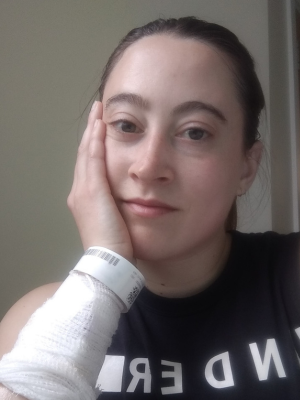 I spent the first week of May in a state of limbo, splitting my time between the sofa and my local nature spaces, treasuring each moment I could breathe the fresh air and listen to the birds. I was waiting for a call.
This call would be the first such call I had ever received. As a 27-year-old woman living with cystic fibrosis, I had never before had an inpatient admission to hospital. And I was terrified. Many people I spoke to attempted to reassure me, saying that it would be a nice break from life and that I would return invigorated.
I was reminded of a scene in that Aardman gem of a film Chicken Run, where Ginger is released from her coal bin prison to find an ever-effervescent Babs greeting her return from ‘holiday’: “I wasn’t on holiday, Babs, I was in solitary confinement.” “Oh, it’s nice to get a bit of time to yourself, isn’t it?”
Then, the call came. A bed had my name on it.
I survived my two-week stay in hospital. At times it was even enjoyable, in between all the routine medical trauma – if you know, you know. It was nice to get a bit of time to switch off from my daily life and have one thing to focus on… maybe Babs was onto something!
So, what did I do to manage?
 1. My first priority was getting outside as much as possible.
Before my stay, I researched local green spaces and mapped out routes from the hospital. Despite being next to an international airport, an industrial estate and a large housing estate, within ten minutes, I was wading through wildflower meadows, stepping over streams and inhaling large gulps of wild garlic-infused woodland air. Bliss! Luckily the CF ward at my hospital also has a lovely garden I could sit and read in when I didn’t feel up to a walk.
My nurses were also very accommodating and soon got used to the little notes I’d leave on my bed to let them know where I’d disappeared to. I found it best to go for my walks during the quiet evening after dinner.
I even made a map for some ward staff interested in exploring the local area after work.
2. I made a calendar.
I don’t know how anyone copes without a record of the multiple people (nurses, doctors, physios) per day they’re seeing during an inpatient stay. The only way my sieve brain can keep track of things is by writing them down, so I drew a makeshift calendar that saved me a lot of stress!
I also noted the times my IVs were due each day and crossed each infusion off. This was immensely satisfying and motivated me on hard days when I felt rough and missed home.
 3. I kept my home comforts and routine.
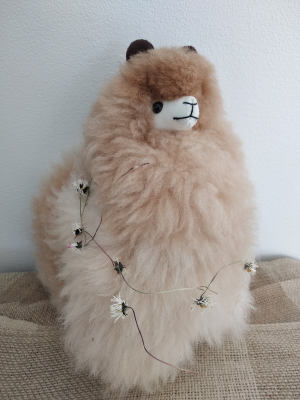
I may be 27, but I am certainly not immune to the soft comfort of a stuffed alpaca toy, and I am not ashamed to say that Al the alpaca got me through some tough times in hospital. I also brought Tintin comics my mum used to read with me when I was sick as a child, and I played my music out loud and danced in my room (when I wasn’t attached to a line). I also brought my favourite snacks and foods to lift my mood. You’ll know your own coping mechanisms – keep them up when you’re feeling low.
I also found sticking to a routine really helped me stay motivated, even if that meant simply getting out of my pyjamas and into different pyjama-like day clothes. I opened the blinds and the window every morning for fresh air and sunlight and spent as much time as I could near the window instead of in bed.
4. I was creative and curious.
As well as making the map, I dabbled in origami and calligraphy and read four books during my stay. On social media, I’ve also seen many people with CF (with more talent and patience than me) doing cross-stitch during inpatient stays.
It’s tempting to scroll through social media or watch movie after movie, and this might be the right way of coping for you, but I knew this wouldn’t be good for my mental health. I rarely get the time to aimlessly create or read a book for six hours solid, so I appreciated it. Having said that, watching Shrek 2 was a highlight.
5. I (eventually) let people visit me.
I can be a very proud and private person, and I was initially reluctant to allow people to visit me. I almost cancelled a couple of times when friends were due to arrive after I’d had a tough conversation with my team or generally felt a bit rubbish. Without fail, I always felt better after someone visited me, though, and allowing myself to be vulnerable has strengthened a lot of those relationships.
6. I got to know ward staff.
It felt extremely odd to have strangers wandering in and out of my room, and it was often a huge effort to get out of my head and force myself to have a conversation. But over those two weeks, learning about each of their lives, I eventually started to look forward to seeing people every day and temporarily forget why I was there. Most people have cool stories to tell if you let them.
7. I learnt to be patient.
It’s ok to rest and recuperate. That’s what hospital admissions are for. I was lucky enough to be in pretty good health at the start of my stay and didn’t have any adverse reactions to the antibiotics, but I still needed rest.
I also know how frustrating it is to feel worse before you feel better as the IVs kick in and dislodge 27 years’ worth of gunk. It wasn’t until about two weeks after my stay that I felt better than when I’d started, which was disconcerting at times.
8. I advocate for myself as much as possible.
You are the one living in your body. If something doesn’t feel right, speak up and ask questions. It took me a good couple of days to get comfortable even using the call buzzer when I could see how busy the ward staff were, but they’re there to help you get the most out of your stay. Many hadn’t realised that this was my first admission, so there were things that weren’t explained to me initially, which was pretty stressful. Once I was upfront and honest about my stress, most quickly reassured me and took me through everything I was unsure about.
Cystic fibrosis (CF) is a genetic condition which causes sticky mucus to build up in the lungs and digestive system. It affects more than 10,900 people in the UK. One in 25 of us carries the faulty gene that causes it, usually without knowing.
Since 1964, we've supported people with cystic fibrosis to live longer, healthier lives -and we won’t stop until everyone can live without limits imposed by CF.
If you’re struggling with any aspect of cystic fibrosis, we’re here to help. Contact our Helpline for support, a listening ear or just someone to talk to.

Here to help
Our friendly Helpline team are here if you need us - whether you're looking for information, support, or just someone to talk to