
Lorena deserves to be remembered in her fullness – not just as someone who lived with CF
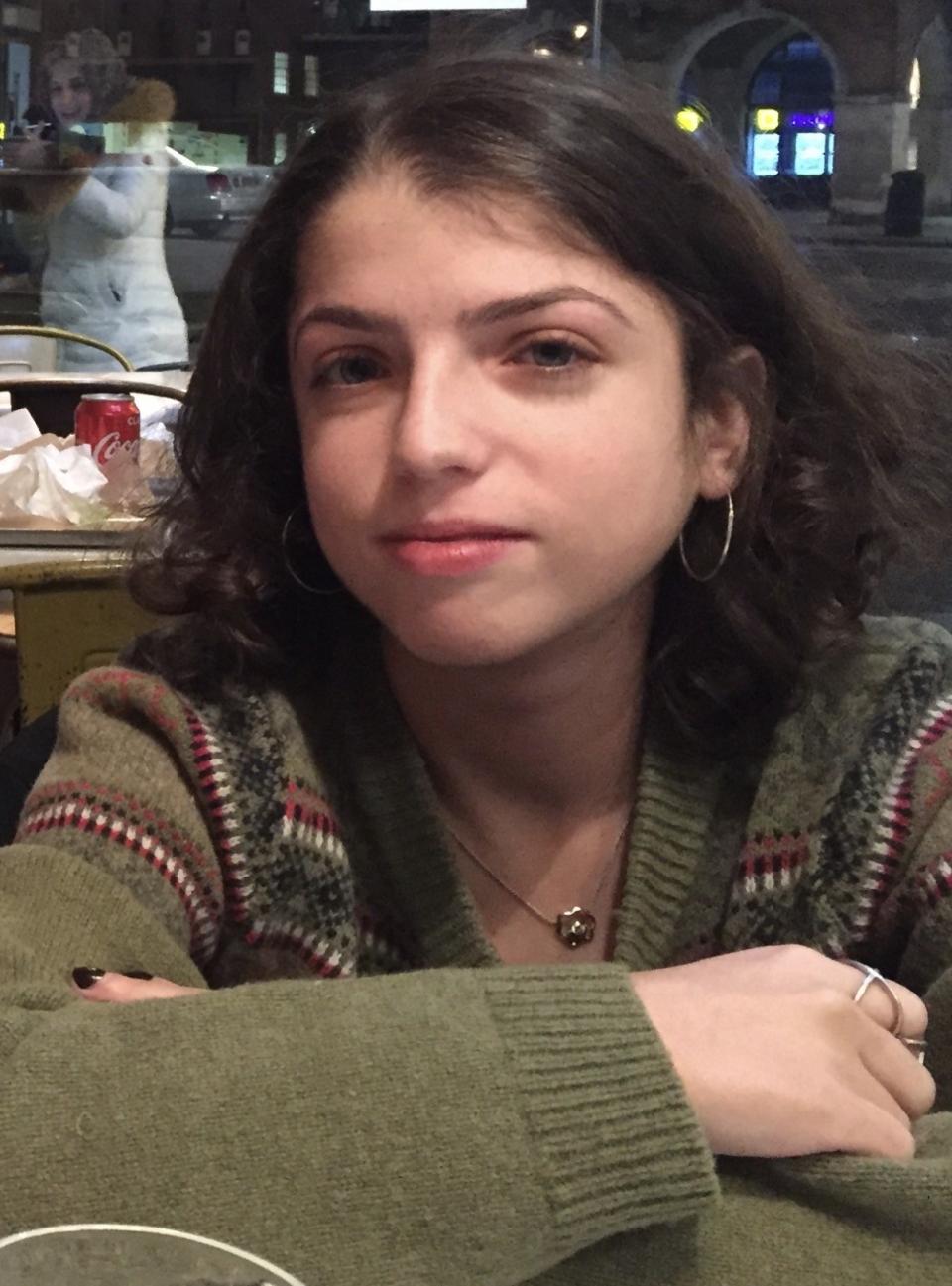 Lorena was diagnosed with cystic fibrosis (CF) at birth through a bowel obstruction and her first year of life was very touch and go, with multiple abdominal surgeries. Her condition was so severe that we had to leave our home country, Turkey, and move abroad to access the specialist care she needed. Lorena underwent two major operations and long admissions over two years. Their skill and dedication gave her a foundation on which she could build a life.
From early childhood, Lorena's routine included twice-daily physiotherapy and inhalations, dozens of pills to support her pancreatic digestion, vitamins, and from age 13, insulin injections five times a day. This was simply her normal and she carried it with remarkable matter-of-factness.
We moved to London in 2000 and when she was nine, Lorena began complaining persistently of abdominal pain. We were repeatedly sent home with reassurances that it was constipation. But eventually she suffered a complete bowel obstruction requiring emergency surgery – a crisis that, with more attentive care, might have been caught earlier. After that major bowel operation, Lorena was diagnosed with non-TB mycobacterium. She was recommended a portacath and intravenous antibiotics every other month.
For the first time, Lorena fully understood the weight of her CF. She became depressed and began talking about suicide. Psychologists had always been part of her CF care, but at this point I took her into intensive private child psychotherapy.
In 2021, Kaftrio arrived and transformed Lorena’s life. For the first time, she could dream of living to 60 and having her own family. She threw herself into her artwork, her friendships, her travels. Just before she died, aged just 29, she had artworks in three exhibitions. She was at the height of her creative powers.
A talented artist
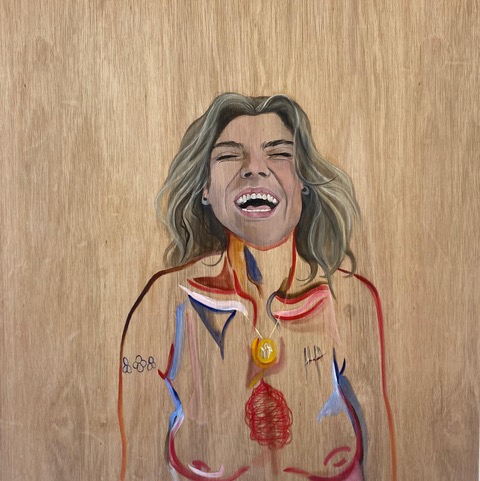
I’ve always made sure Lorena had space to express herself through the arts in which she was so naturally gifted – drama, dancing, singing, and painting.
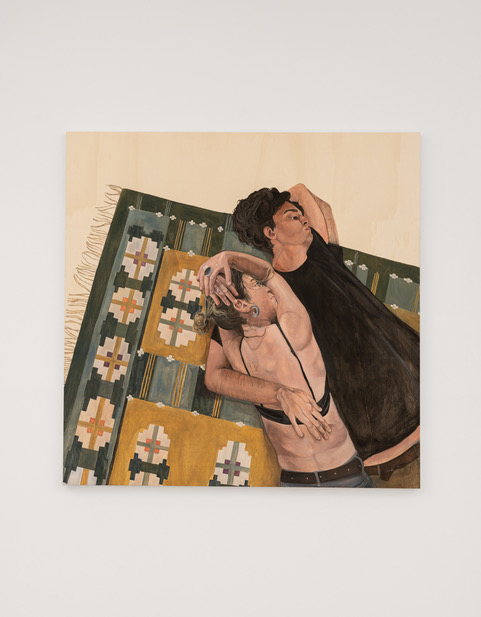
After graduating from Edinburgh College of Art, Lorena won the Jackson's Painting Prize. She was one of three finalists on Portrait Artist of the Year, received the Cass Art Emerging Artist Award, and her works entered the UK Government Art Collection, the Rothschild Collection, and the Royal Scottish Academy. She had a solo exhibition in Milan, was due to exhibit at Marlborough Gallery in London, and had invitations for residencies and exhibitions in China, Greenwich, Istanbul and Los Angeles.
Her final work was the Brussels mural – a large-scale public commission created collaboratively with the street artist Kool Koor, to mark the Belgian CF charity’s 60th anniversary. She and Kool wrote their own statement about it. They said: “The figures walking together represent the CF community's shared journey – a disease that once shortened lives dramatically, now allowing people to live and flourish with drugs like Kaftrio. The linear outlines within some figures acknowledge the losses along the way. The bright colours, the labyrinthine backgrounds – it is full of peace, joy, and forward movement.”
She was so proud of it. It was, in retrospect, the perfect final statement – her illness, her community, her art, all in one monumental work.
The unveiling will be bittersweet. I will be there with her sister, Ella, and with others who loved her. It will be the most meaningful way we have to feel close to Lorena and to stand in front of something she made, something joyful and lasting, and know that she is still here.
Raising awareness of cystic fibrosis
Sharing Lorena’s story is important to me because CF is still not fully understood by the wider world, and stories like Lorena's show both what is possible and what can still be taken away in an instant. It feels like the most meaningful way I can advocate for the CF community she belonged to all her life and to keep her present in the world. I also want to speak honestly about some of the ways the system failed her.
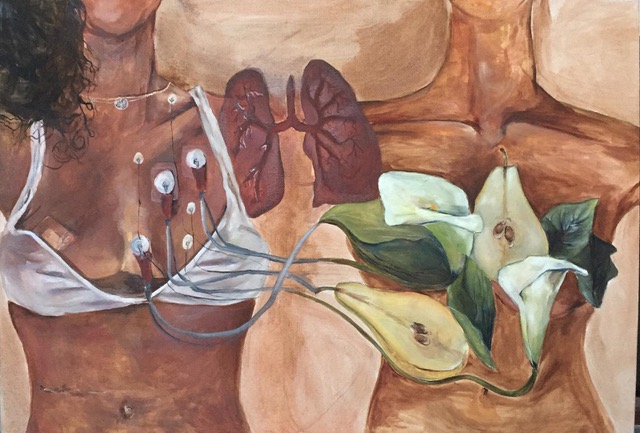
CF is not only a lung disease – it affects the whole body. People with CF cannot be near each other, which creates a particular kind of loneliness in the community. Many people with CF are now living longer, but CF remains a life-limiting condition that requires constant vigilance. People with CF have also started experiencing higher rates of cancer. This means we need much closer collaboration between CF and oncology teams.
I also want to speak honestly about something harder. In our experience, the care people with CF receive is not consistent across the UK and that inconsistency can cost lives. The consequences of an overstretched system can be catastrophic.
The most concrete and heartbreaking illustration of this failure came after Lorena's metastatic pancreatic cancer was finally diagnosed. Her CF consultants at one hospital came to her and apologised. They told us that in 2022 a radiologist had detected a mass in her pancreas and had recommended MRI monitoring every three months. Those appointment letters were never sent. For two years, Lorena received no follow-up on a known pancreatic mass. By the time it was caught, the cancer had spread.
The consultants themselves could not say whether it was an administrative error or a clinical decision. Either way, the consequence was the same: a young woman who had already suffered pancreatitis during her studies – and who was therefore a known higher-risk patient – was left unmonitored at the precise moment when monitoring could have saved her life. She could be alive today. Her consultants said as much when they apologised to her. I want that to be on record.
When the cancer was finally diagnosed, a second failure compounded the first: her CF team and her oncology team never coordinated her care. Each service looked at her through its own narrow lens.
TPN, which is the nutritional support she needed to maintain her weight and strength to tolerate chemotherapy, was refused on the grounds that it carried a risk of infection. But without it she lost weight rapidly, her body weakened, and her ability to fight both the cancer and her CF deteriorated.
Her biliary stent (a small tube placed in the bile duct) needed replacing, but this was refused on the grounds that her abdomen was, in the doctors' words, a war zone, making the procedure too risky. But without a functioning stent, she suffered severe bloating, repeated infections, and the cancer spread to her liver.
Each refusal was presented as clinical caution. But Lorena wanted to fight. She had exhibitions planned, a mural about to be unveiled, a sister she adored, a life she was not ready to leave. The system's abandonment was not her surrender. That is what I want people to understand. And that is what must change.
She was not a ‘brave CF patient.’ She was an artist, a sister, a daughter, a friend, who also happened to carry this illness with extraordinary grace.
Sheila
My hopes for the future
I hope that every person with CF in the UK receives the same quality of proactive, attentive care – regardless of where they live. I hope that the known increased risk of pancreatic cancer in people with CF leads to routine, systematic screening as standard, not something a person has to fight for. And I hope that when someone with CF is diagnosed with cancer, there is a clear, mandatory protocol for joined up care.
Kaftrio has opened a new chapter for people with CF. Longer lives bring new medical challenges. The healthcare system must evolve to meet them and I want Lorena’s death to mean that the next person with CF is not failed in the same way.
The support of Cystic Fibrosis Trust
Cystic Fibrosis Trust has been a source of information and community throughout Lorena's life – a place where the particular reality of living with CF was understood without explanation.
But their most significant contribution to Lorena's life was one that affected the entire CF community: their determined campaigning to ensure that Kaftrio was made available on the NHS. Kaftrio is an expensive genetic therapy, and its path to NHS approval was far from guaranteed. The Trust fought that battle on behalf of everyone with CF in the UK. That victory changed Lorena's life profoundly and concretely.
The Trust has also been instrumental in establishing standards of care for CF services across the NHS – and that work matters enormously. But standards on paper require the right medical culture to bring them to life.
In the most recent and most painful period, following Lorena's death, the Trust showed great personal kindness, which meant more than I can easily express. When you are grieving and navigating the aftermath of loss, small acts of humanity mean so much.
I want people to remember Lorena as someone who chose life
Lorena took pain and transformed it into something beautiful that will outlive us all. I want people to remember her gentleness with the world, her fierce curiosity about people, her extraordinary eye, and her humour, because she was wickedly funny.
She was not a ‘brave CF patient.’ She was an artist, a sister, a daughter, a friend, who also happened to carry this illness with extraordinary grace. When she was young, a therapist told us that Lorena was living fast because she knew her life would be short. On the day she died, that same therapist told me that in their very first session together, Lorena had sung "I Wanna Live Forever" from Fame. And she did. Through her art, she always will.
Lorena was a very talented young lady who died far too young from complications linked to CF and despite modulator treatment. Her story illustrates why we have to continue to fight to ensure people with CF get access to the best possible care and treatments available.
Keith Brownlee, Director of Medical Affairs at Cystic Fibrosis Trust
Our Helpline
For information and support on anything to do with cystic fibrosis, including bereavement, contact our confidential Helpline.
- Call 0300 373 1000 or 020 3795 2184, Monday–Friday 10am–4pm
- Email [email protected]
- Chat with us on Facebook, Twitter or Instagram
- Message us on WhatsApp on 07361 582053

Our e-newsletter
Be the first to hear about the latest CF research breakthroughs, stories from our community and how you can get involved in our work.