This article is more than 3 years old
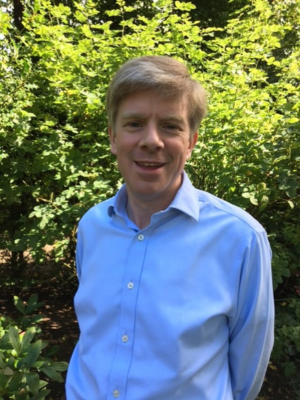
Managing CF as an author: Julian’s story
 Can you tell us a little about yourself and your CF journey?
I was diagnosed with CF a few months after I was born, around August 1984. After attending a school near home, I went to Lancaster University to read History, finishing with an MA in 2006. I worked at a nearby manor house for six years, which was open to the public. Then in 2012, I was lucky enough to get a job at the RAF Museum in London, working on the Centenary exhibitions for the First World War in 2014 and the RAF in 2018.
I have been under the care of the Adult Cystic Fibrosis Centre at Wythenshawe Hospital in South Manchester since I was about 18. I feel fortunate to be looked after by such a skilled and caring team.
Tell us about your job!
Since 2018, I have been writing several books. My book The RAF 1918-2018 came out in 2018 and was followed in 2020 by Women in Aviation. I have just finished a book for Osprey’s Air Campaign series about the World War II air campaign entitled ‘The Blitz 1940-41’. The RAF book led me to research and write a number of ‘Mission Packs’ – a small collection of documents, photographs and so on, with an accompanying booklet – for various museums on topics such as Operation Chastise: The Dambusters Raid; Operation Dynamo: Dunkirk 1940; The Battle of Britain 1940; and Enigma: The Battle for the Code.
At the moment, I am researching another Air Campaign book about the Allied air campaign before and during D-Day in 1944. I am also finishing a long-term project about British aircraft in the First World War, focusing on six aeroplanes which made a difference in the conflict. It should be out in a year or two – time permitting!
Researching and writing books can be enormously fun – but also hard work. The research can throw up all sorts of interesting details, as well as opening new lines of enquiry. Historical debates change over time.
How did you get into this area of work?
The writing began in 2016 when I was an Assistant Curator at the Royal Air Force Museum in London. A friend from the RAF Air Historical Branch at Northolt called to say that Shire had commissioned him to write a book on the history of the RAF to mark the centenary in 2018. However, he was too busy at the time, so he offered me the opportunity, and because I can never say no, I agreed to do it, albeit with much trepidation.
Have you faced any challenges/barriers when it comes to work?
Yes and no. In the years before Kaftrio became available, it was sometimes challenging to fit my daily treatment regime alongside my 9 to 5 job. On the other hand, the museum could not have been more supportive throughout my six years there. Now that I work from home, I can work on my own time and as late into the day as needed.
Until 2020, my health looked increasingly precarious as I reached my mid-to-late 30s. However, I am lucky enough to be under the care of my CF unit, where the staff have looked after me incredibly well.
Julian
How would you describe your job in three words?
Difficult but rewarding.
What does an average working day look like for you?
Mornings usually consist of reading and making notes for research, while afternoons are spent writing and adding the notes to a research index for later use.
When writing, I collate the research, think out the appropriate ‘weighting’ for each topic and produce a series of bullet points for each theme and sub-theme. The narrative usually flows from there.
How do you balance your CF and work? Any top tips?
Like everyone – especially those with CF – it’s about balancing work with everything else. I try to exercise in the morning before starting work – either a walk or 25 minutes or so on my exercise bike. Then I usually work through the morning. I often do some more exercise after lunch. I also try to play golf two to three times a week in the summertime.
My only top tip is somewhat unoriginal – but try to settle into a routine. It’s essential when undertaking any large project, especially with the treatment regime necessary for CF patients.
What do you love most about what you do?
I love researching primary sources, some of which may have been forgotten for decades. They can help to put a different angle on a given subject. For example, when researching the book on the Blitz, it turned out that the Nazi bombing of Britain was much less damaging than many have since believed. Although the campaign caused a great deal of human suffering, there was very little chance of it forcing Britain to surrender or even damaging the British war effort in any meaningful way.
What are your hopes for the future?
Until 2020, my health looked increasingly precarious as I reached my mid-to-late 30s. However, I am lucky enough to be under the care of my CF unit, where the staff have looked after me incredibly well. In early 2020, I was put on Kaftrio, which changed everything. I now need far less time for daily treatment (especially airway clearance), my weight has gone up, and I suddenly have much more energy and can do more exercise. I hope other CF patients have benefited similarly – and can now look forward to living longer and fuller lives.
Join our Everything Employment Week! Running from Monday 11 - Friday 15 September our Work Forwards team will be hosting a series of free online events focusing on all things employment for the CF community. We’ll be covering everything from being a parent in the workplace through to starting your career and self-employment. Everyone welcome!
Register here
If you’ve got a question about work and CF, want to talk through your career options, or want support to balance work and health or CF caring responsibilities, find out more about the Work Forwards programme or contact the team at [email protected].

Work Forwards
Empowering people with cystic fibrosis to fulfill their career dreams and aspirations