This article is more than 1 year old
Pushing for global access to CF treatment
 How the global CF campaign began
After being heavily involved in the UK campaign for access to Vertex Pharmaceuticals’ CF treatment Orkambi – and later witnessing my own daughter’s life transformed when she started taking Kaftrio in 2020 – in October that year, I co-founded the grassroots global campaign group Vertex Save Us (VSU).
I’d learned so much during the UK battle, and I knew these drugs' high prices would leave countless CF families around the world shut out from a treatment they urgently needed. Within months of the launch, VSU had thousands of supporters from over 60 countries –families united by the same desperation for access to CF modulators.
From that point, I started to build relationships with some incredible CF families, clinicians, and advocates globally. Together, we raised awareness on social media, met with Vertex executives, and even submitted an official complaint to the United Nations, challenging Vertex’s disregard for humanitarian principles. Realising we needed more resources and support, in 2023 we launched the Right to Breathe campaign in partnership with UK-based patient-led organisation Just Treatment, where I now work.
For the launch, I played a key role in organising a landmark moment: calls for patent challenges in four countries – Brazil, India, South Africa, and Ukraine – on four continents all on the same day. It’s interesting that having been thrust under this global spotlight, all four countries now have some form of access to Kaftrio/Trikafta. This coordinated, international action was unprecedented, and even earned a full-page report in the New York Times.
Since then, I’ve devoted my efforts to supporting and empowering families affected by CF around the world - amplifying their voices and collaborating with human rights experts and advocates to leverage international laws that protect public health over corporate profit. Together, we are working to challenge Vertex’s profit-driven practices, which restrict access to life-saving treatments and undermine the fundamental right to health.
What this fight means to me
This fight is deeply personal to me because I’ve stood where so many of these CF parents are now – knowing that a treatment exists that could save your child’s life, yet being completely unable to access it. That overwhelming sense of helplessness has never left me. It continues to fuel everything I do and it’s what drives me to support and empower other CF mothers, families, and patients to stand up, speak out, and demand the change they so urgently need and deserve.
Taking the fight to the WHO
As the campaign progressed, I realised the importance of getting cystic fibrosis treatments included on the World Health Organization’s (WHO) Essential Medicines List (EML), a powerful tool to improve access in low- and middle-income countries.
Inclusion of a high-cost drug on the EML can be transformative. It sends a powerful message that, regardless of price, the treatment is medically essential and deserves global prioritisation. EML listing can influence national health policy, unlock funding, drive down prices, and pressure pharmaceutical companies into licensing deals or allowing generic competition. For families still waiting, it could be a lifeline they've been denied for too long.
Through connections with access-to-medicines advocate Dr Andrew Hill, of University of Liverpool, and a group of amazing UK researchers, we approached the WHO about adding elexacaftor/tezacaftor/ivacaftor (ETI) – the generic name for Kaftrio – to the EML.
The WHO were supportive and encouraged us to submit an application. We held several meetings with them to refine it, receiving constructive feedback along the way. To strengthen the case, I coordinated two letters of support – one signed by 35 national and international CF organisations, including Cystic Fibrosis Trust, and another by more than 50 leading human rights and access-to-medicines groups and representatives. We submitted our 98-page EML application (including the letters of support) in October.
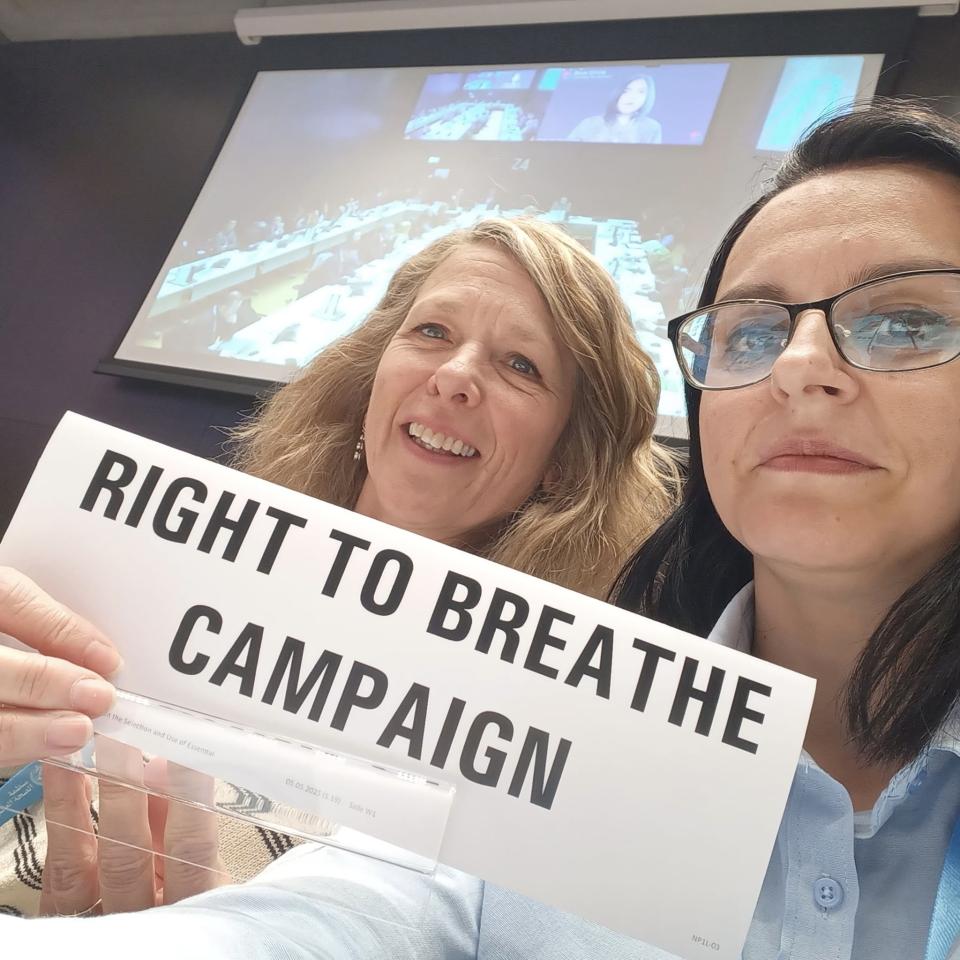
On 5 May 2025, I travelled to WHO Headquarters in Geneva with fellow CF mum Ajsela Kushova from Albania to deliver an in-person presentation to the WHO Expert Committee on the Selection and Use of Essential Medicines. We spoke about our lived experiences of life with and without Kaftrio – the difference it makes, and the suffering that continues without it. The room was completely silent during the presentation, and afterwards, many attendees expressed their support. The Chair closed the session by emphasising how important it is for the WHO to include drugs for rare diseases like CF on the EML – a powerful acknowledgment that I hope leads to real change.
What’s next?
We’re now awaiting the WHO’s decision and we expect the updated EML to be published by the end of July. Encouragingly, two members of the WHO Expert Committee have already offered positive recommendations, so we’re hopeful.
Looking further ahead, we’ll be attending the North American Cystic Fibrosis Conference (NACFC) in Seattle in October, where I’ve been invited to speak, and will share the stories of the Right to Breathe campaign and of the families still waiting for access to the treatment that they desperately need.
It’s shocking to think that, nearly six years after Trikafta/Kaftrio was first approved, thousands of CF children around the world are still dying needlessly.
How people can help
To find out more about the Right to Breathe campaign, visit our website, or follow us on social media @VertexSaveUs.
In response to the blog, a Vertex spokesperson said:
“We share the urgency of people living with CF across the globe to have sustainable access to our medicines as quickly as possible. Our medicines are currently treating more than 75,000 patients, representing more than 2/3 of people diagnosed with CF who are eligible for a CFTR modulator therapy, which is remarkable progress for a rare disease.”

Our e-newsletter
Sign up to our monthly e-newsletter for the latest CF news and research, stories from the community, and all the different ways you can fundraise for the Trust.