This article is more than 4 years old
What we learned at the UK Cystic Fibrosis Clinical Trials Conference
On a cold, damp Friday morning we gathered in Nottingham for our first in person conference for over two years! Cystic fibrosis teams from across the country – both clinical and research – were excited to see colleagues and hear about the changing landscape of CF clinical trials. A topic that we’ve all become very familiar with during the COVID-19 pandemic, as we've seen global clinical trials for both treatments and vaccines set up at speed, in real time.
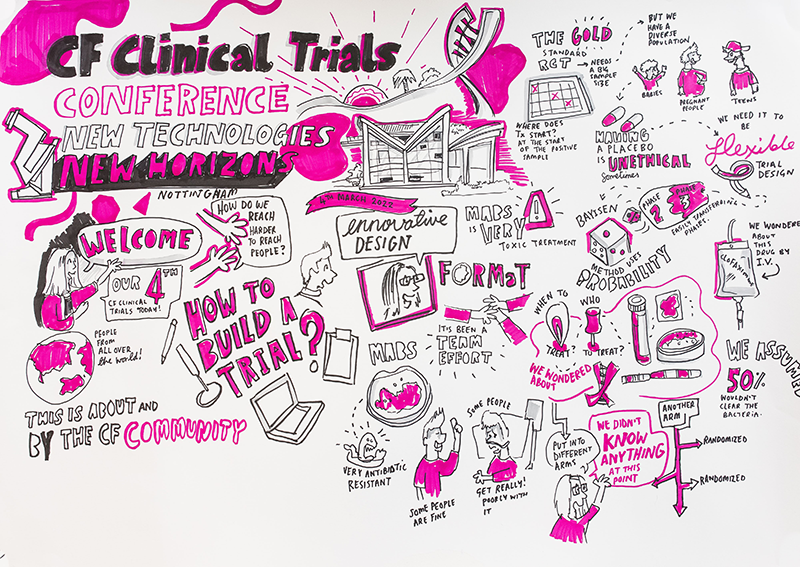
One key area of discussion was around the changing world of CF and how we adapt to the new landscape. A new era in the way we treat CF has begun, while mindful that some people with CF remain reliant on traditional treatment options. As many 6–11-year-olds are now able to take Kaftrio too, over 90% of people with CF are now eligible for highly effective modulator therapies. With this brings a change in demographics of people living with CF – more are living well and for longer, there are more pregnancies and our latest CF Registry data reveals a major increase in 18-year-olds having normal lung function.
However, these exciting and significant steps forward in treatment could have an impact on how many people take part in clinical trials. As the health of people with CF improves, they may be less available to take part, their enthusiasm to take part may decrease and they may have other priorities in their lives. In addition, clinical trials need enough people to take part to be able to collect a rich amount of data so the design of the clinical trial, as well as how many people are now eligible to take part within smaller populations, could be impacted.
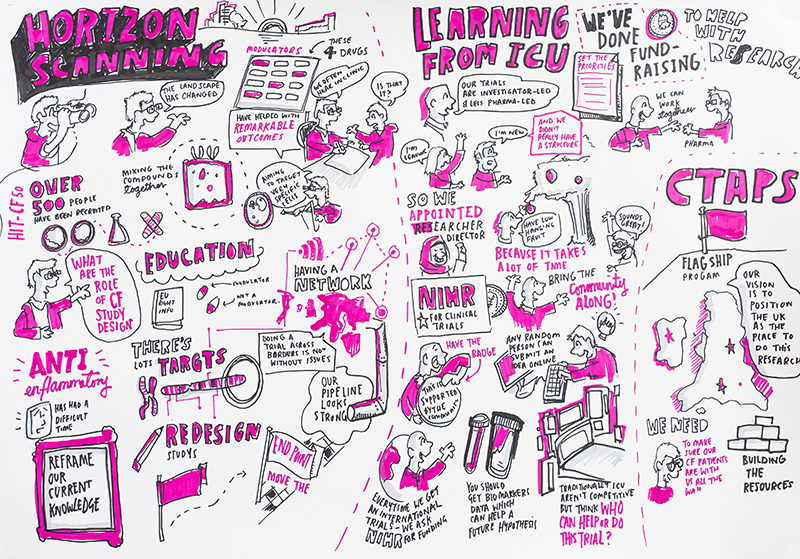
Here’s what some of our speakers believe is the best approach to deal with the changing landscape:
Dr Peter Barry, Manchester University NHS Foundation Trust, said: “There’s a new era of CF care and clinical trials need to reflect this. We propose that we change and broaden the criteria for clinical trials and look for solutions to increase the pool of people able to take part.”
Natalie Goodchild, who has CF and is a marketing and brand consultant, said: “If we’re going to increase the use of digital technologies in the design of studies, we need to ensure that no one is being excluded because they can’t access or don’t know how to use the technology.”
Lorna Allen, Involvement Manager at Cystic Fibrosis Trust, said: “Involving the CF community in the development of new research and defining meaningful outcome measures is crucial, as well as informing the design and delivery of clinical trials. Research may be developing a new treatment, focusing on that in isolation. In practice, people with CF will be taking that medication as part of a wider treatment regime. To understand how to get optimal benefit from each medication, whether that’s taking it on an empty stomach, with fat or before physio, you need to understand what living with CF is really like, what each day entails and what impact on practicalities will influence their decision to take part in clinical trials.”
To find out more, we caught up with the Trust's Clinical Trials team at the conference, to get their thoughts on the future direction of clinical trials, the hurdles we need to overcome, and what we can learn from the COVID-19 pandemic...
What do you think will be the future direction of clinical trials?
"While Kaftrio has improved life for many, it isn’t a cure and there are still people who aren’t eligible for, or don’t benefit from taking it. In the future, we may see more trials for those with rare CF mutations as well as early phase clinical trials of advanced therapy medicinal products, or ATMPs, including genetic therapies which target the root cause of CF.
"In alignment with the James Lind Alliance (JLA) Research Priorities Refresh, the future research and clinical trials landscape will shift with the changing needs of the CF community. Depending on the results of the JLA project, this could mean more of a focus on CF symptoms outside of the lungs, such as gut health and CF-related diabetes."
The speed at which research, clinical and regulatory teams, as well as the wider community, have adapted to the ongoing health crisis is a key learning that is important to keep with us as we emerge into a post-COVID-19 world. We must acknowledge new and improved processes implemented during the pandemic, and also be mindful of things that didn’t work so well, to make sure that momentum isn’t lost going forwards and that we can continue to deliver innovative new trials at the opportune time.
Clinical Trials team at the Trust
What do you think are the biggest hurdles to overcome?
"With the roll-out of Kaftrio, and many people with CF seeing marked improvements to the stability of their health, the ways in which outcomes are assessed in clinical trials will have to be reevaluated. Changes in things like lung function or quality of life may be harder to detect after taking a new treatment if these values are already high at the start of the trial.
"There is also still work to be done to ensure that we have fair representation of all people with CF in clinical trials, regardless of ethnicity, geography, socio-economic status or state of health and co-morbidities. We will be working hard to try to identify and reduce any inequalities of access to clinical trials."
How do we galvanise the learnings that happened during COVID-19?
"The COVID-19 pandemic has been an unprecedented time for accelerating research and clinical trials, driving through important new treatments while taking care not to cut corners when investigating safety and effectiveness. It has also been a time of vast technological advancement in healthcare practices, enabling people to access virtual clinics online and take health measurements at home, bringing with it new possibilities of how clinical trials can be run.
"The speed at which research, clinical and regulatory teams, as well as the wider community, have adapted to the ongoing health crisis is a key learning that is important to keep with us as we emerge into a post-COVID-19 world. We must acknowledge new and improved processes implemented during the pandemic, and also be mindful of things that didn’t work so well, to make sure that momentum isn’t lost going forwards and that we can continue to deliver innovative new trials at the opportune time."
Cystic fibrosis (CF) is a genetic condition which causes sticky mucus to build up in the lungs and digestive system. It affects more than 10,800 people in the UK. One in 25 of us carries the faulty gene that causes it, usually without knowing.
Your donations help us fund vital research. Donate today to help everyone with CF live a life unlimited.
Clinical Trials Accelerator Platform
The Clinical Trials Accelerator Platform is a UK-wide initiative bringing together cystic fibrosis (CF) centres to support the CF community access and participate in CF clinical trials.
Trials Tracker
The Trials Tracker brings together all CF trials currently recruiting in the UK, so you can find clinical trials you can take part in both in your region and further afield.

Break the ice with #CFTruths
Help others understand what everyday life is like for people with CF.