
This article is more than 3 years old
"I have Kaftrio to thank massively for allowing me to live a relatively ‘normal’ life" Cerys's story
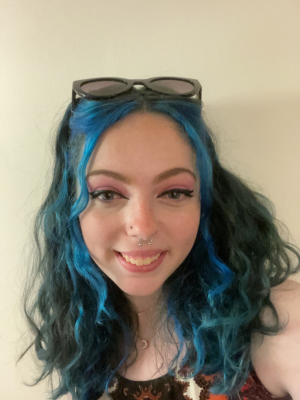 Hello! My name’s Cerys, I’m 19, and I have cystic fibrosis. A lot has changed for me in the past year, and I wanted to share some ways this has affected my CF and how I balance living a ‘normal’ life with my condition. But first, let's go back to basics.
Diagnosis and growing up with CF
I was diagnosed at four weeks old, so I’ve never really known any different. Growing up, I felt like there was a lot of attention on my CF as getting sick, going to hospital, and not being able to join in with some of the things the other kids did to avoid getting ill made me different from everyone else. My peers used to ask a lot of questions until a TV show came out about my life with CF that I referred everyone to if they wanted to understand more. Making the show introduced me to some great people, and I met some of my closest friends, who also have CF, off the back of it (virtually of course). I think that was the first time I began to appreciate my condition, as it connected me to amazing people, who I’m still in touch with today, and the other kids at school saw me as a celebrity instead of the one who always gets ill.
University
I have always been relatively transparent about my CF with my friends, as I think it makes it easier to manage treatments openly, but I always find it difficult when I’m in a new place. I started university last September, and for the first month or so, nobody knew about my CF or my treatments. My flatmates soon figured it out when they came into my room and saw what they described as ‘an entire pharmacy’. Then eventually, I started taking my Creon openly and prepared to face the questions. Most people have never heard of CF before, but those who have often know about it from outdated school Biology lessons or, worse, the dramatic internet pages that focus on the stark, depressing side. I usually have to spend a while debunking some of their preconceived ideas about CF and living with a chronic condition more generally. The word ‘disability’ often has negative connotations, and when people see me as a ‘disabilities officer’ for certain uni societies or hear about my condition and then also see me thriving on my course, maintaining a good social life and quite honestly going absolutely crazy with my friends, it opens their eyes to an entirely new definition of disability, centred more around determination despite adversity.
Of course, managing my health and life at university certainly hasn’t been easy, and I have been subjected to my fair share of chest infections (my body did not agree with freshers flu), tonsillitis and general fatigue. As well as adapting to a new way of living and being independent, like every student, I also have to look after myself alone when ill, which I’d never done before. For me, I think one of the biggest challenges is my body not being able to keep up with my brain.
Cerys
Of course, managing my health and life at university certainly hasn’t been easy, and I have been subjected to my fair share of chest infections (my body did not agree with freshers flu), tonsillitis and general fatigue. As well as adapting to a new way of living and being independent, like every student, I also have to look after myself alone when ill, which I’d never done before. For me, I think one of the biggest challenges is my body not being able to keep up with my brain. I’ve always had quite a bubbly personality, and I love hanging out with my friends, visiting places and generally having a packed schedule,but sometimes my body just can’t keep up, and that’s when I get sick. It’s been a challenge to know when to stop and rest when all I want to do is go out and have fun, but it’s a work in progress, and I’m learning to listen to my body more and know when it needs to rest. However, I think it’s beneficial to show people that despite my condition, I can still be a regular 19-year-old when I’m healthy. Plus, CF also has its benefits when you can answer more medical questions, think of diagnoses, and name more antibiotics than your flatmate studying medicine can (not talking from experience…)
Kaftrio
I have Kaftrio to thank massively for allowing me to live a relatively ‘normal’ life. Although it hasn’t stopped me from getting chest infections and it hasn’t got rid of CF, it has stopped my condition from getting worse, and my health is now very manageable. It wasn’t that long ago when people with CF couldn’t really consider university, so I feel very grateful that I’m able to have that chance! I don’t want to waste the opportunity I’ve been given, so this year, I’ve pledged to help increase disability awareness and organise events that highlight the challenges faced by disabled students to help create a more open and supportive environment for students. Beyond university, I hope to continue this work in my future career. My degree is in Politics and Journalism, and although I haven’t fully decided which path I want to take, I know that in some way, I want to feature disability activism, whether that be in journalistic pieces or a more policy focused route. Whatever I end up doing, I know that I won’t let CF get in the way of my goals, and the determination it has given me will stay with me for life.
Cystic fibrosis (CF) is a genetic condition which causes sticky mucus to build up in the lungs and digestive system. It affects more than 10,800 people in the UK. One in 25 of us carries the faulty gene that causes it, usually without knowing.
Since 1964, we've supported people with cystic fibrosis to live longer, healthier lives - and we won’t stop until everyone can live without limits imposed by CF.
If you’re struggling with any aspect of cystic fibrosis, we’re here to help. Contact our Helpline for support, a listening ear or just someone to talk to.
