
This article is more than 4 years old
Tackling health inequality in the CF community
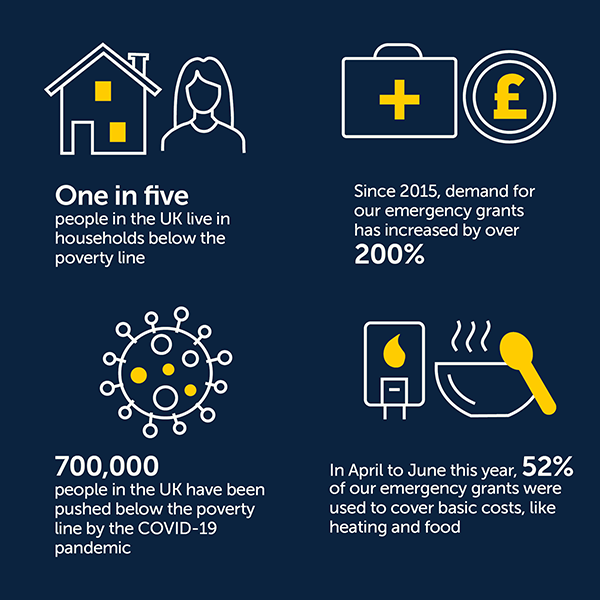
 Let’s begin by defining what we mean when we talk about poverty and social deprivation. Poverty relates to a lack of money to afford what most of us would think of as the basics we need. According to research by the Child Poverty Action Group, one in five people in the UK live in households below the poverty line. For people with cystic fibrosis, this could mean being unable to afford to eat well or to keep your home warm and dry –things which we know are really important in keeping well with CF.
Social deprivation is defined as a lack of resources of all kinds, and includes things like education, income and living environment. Again, for people with CF, all these types of deprivation can have a big impact on overall health.
Delving into the data
The statistics on poverty and social deprivation are a sobering read, shining a stark light on the inequalities in our society. According to the Poverty in the UK report by Borgen magazine, since 2010, food bank usage has increased dramatically across the country; almost three-quarters of children who live in poverty live in a household where someone is working, and another 700,000 people in the UK have been pushed below the poverty line by the COVID-19 pandemic.
We have seen this increase in hardship reflected in demand for our support services. Since 2015, demand for our emergency grants has increased by over 200%. In 2016, we setup a welfare advice service which provides dedicated benefits advice to people with CF, and we have since supported over 1,000 people with Personal Independence Payment (PIP) claims alone.
The UK CF Registry has identified that over 2,000 people with CF live in the 20% of postcode areas with the highest levels of social deprivation. While we don’t have data on household poverty for the CF community, we do know that half of the people who live in poverty in the UK have a disability or live with someone who has a disability.
Some important work by researchers at the University of Liverpool has revealed that social deprivation links to worse health for people with CF. This 2013 study reported: “Our findings show that children with cystic fibrosis from the most disadvantaged areas in the UK have lower weight, height, and BMI in the first years of life after diagnosis, are more likely to have chronic P aeruginosa infection, and have a lower %FEV1 than children in the least disadvantaged areas. These social inequalities persist into adulthood but do not widen.”
Given the importance of a nutritious diet for people with cystic fibrosis, food insecurity is another area of concern, and this was again highlighted during the pandemic. Many families and people with CF shop carefully and have tight household budgets –shielding interrupted this and many just could not afford the costs of food deliveries or to buy the food they needed to stay well. An article in the Lancet medical journal in 2020 reported: “The effect of food insecurity on outcomes in children with asthma and cystic fibrosis, and other respiratory illnesses, are likely to persist for decades.”
Digital poverty can also affect people with CF –for example, not having a phone or device to access health apps or have virtual consultations with your CF team. Appliance poverty is a key issue too –we regularly receive grant applications from people who can’t keep medication cool as they don’t have a working fridge, or who are washing clothes by hand because their washing machine is broken.
Ethnicity is important to consider, as people from Black, Asian and Minority Ethnic backgrounds are statistically more likely to live in socially deprived areas, according to data from the Office of National Statistics. If you take into account other research that suggests people with CF from Asian backgrounds in the UK also have worse health outcomes than white people with CF, it suggests some people with CF from minority ethnic backgrounds are at a double disadvantage. It’s important that we are all aware of these health inequalities so that we can work together for positive change –something the Trust is firmly committed to.
Through our grants programme, every week we’re contacted by people who are struggling to afford basic daily essentials. Usually, this is because something unexpected has happened –such as a hospital admission, or a benefits reassessment, or a drop in employment income. In April to June this year, 52% of our emergency grants were used to cover the sort of thing that many of us take for granted, like keeping our home warm or putting food on the table.
John*, who is in his early 20s and has CF, was homeless following a family breakdown, and having spent a weekend sleeping in his car, was temporarily staying with friends. He also had an issue with his benefits, and while he was trying to sort all of this out, he had also run out of money and couldn’t afford food or basic hygiene products. He needed a same-day urgent grant from us to ensure he could meet his basic needs.
As the cost of living increases, especially after the recent energy price rises and the removal of the £20 per week Universal Credit uplift, more and more families are stretched financially. In a recent survey, we were concerned –but not surprised –to find that people with CF rely on their disability benefits for the very basics they need.
Annie* is a toddler who has CF and requires a specific diet to keep her well. The family are on a low income with no money to spare each month, and through no fault of their own an error with their benefits had left them without enough money for food. Without an emergency grant from us, they would have had to manage with empty shelves and only enough money for very basic food which wouldn’t meet Annie’s needs.
You’re not alone
 It can be hard to ask for help, and often people tell us they feel a sense of shame in dealing with CF and poverty. But you’re not alone. Through the UK CF Registry and the services we provide, we know that financial worries are something that affects many people with CF, and that not having enough money for day-to-day essentials can cause physical and mental health problems for the CF community.
All of the major challenges in life that can leave people worse-off can affect people with CF –unforeseen events like bereavement, family breakdown, homelessness or domestic abuse. The key issue is that for people with CF, being in financial crisis can also have a significant impact on their long-term health
Imani* is a young woman with CF who contacted us in 2020, when, due to an error by her bank, she was left with no access to her bank account at all, and therefore couldn’t access her benefits income. She had been advised to shield, meaning she was unable to get to the shops for essentials, and needed a same-day grant paid into a new bank account to ensure she could place an online grocery order.
Our grants ensure people with CF can cope financially through difficult times and in the longer-term too. While there are state benefits which aim to support people with the extra costs of living with a condition like cystic fibrosis, we know that finding your way through the benefits system can be hard.
We can check benefits and help with claims, providing support on filling in forms or helping prepare for a tribunal. We also have an income maximisation service which supports people with CF to look at any possible extra savings they could make or financial support they could access. On average, our income maximisation service has found around £4,000 of additional money per household, per year, which is really important for people on low incomes and can make a big difference.
Last year, our Welfare and Rights Advisor helped secure £1.6million of income for people with CF through expert benefits advice, and our income maximisation service has helped over 100 people since its launch in 2020.
In the past few months, for the first time ever, we launched a Winter Hardship Support Fund. After almost two years of the COVID-19 pandemic and the cost of living rising, the Fund, which provides a grant and ongoing support from our Welfare Team, is designed to make sure those with low incomes can afford the basics to stay well.
All of our services can be reached through our confidential Helpline by phone, email or social media, and our team will never judge anyone who comes to us for help. We also work closely with NHS CF teams, particularly the network of specialist cystic fibrosis social workers who are on the ground supporting their patients.
As well as the services we provide, we need the Government and policy makers to understand cystic fibrosis, provide effective support, and remove barriers to education and employment. We recently responded to a key government consultation on health and disability, with over 450 of you taking part in the survey which shaped our response. We provided some clear requests ahead of the Government’s 2021 spending review based on the issues you told us matter to you, this included an end to PIP reassessments, and the removal of prescription charges for people with CF. These would be small steps to remove some of the financial pressures facing the CF community.
The true cost of CF
Throughout 2022, we will be continuing to look at the cost of living with cystic fibrosis and the effect of poverty and social deprivation on the CF community. We have recently launched a survey to better understand the true cost of CF and find out about some of the challenges our community faces day-to-day. We will work together with the CF community, specialist teams, our funders, and public bodies, to level the playing field and ensure that poverty and social deprivation don’t damage the health of people with CF.
*all names have been changed
If you are looking for support or information on any of the issues raised in this article, our Specialist Welfare and Benefits Advisor is here to help. Call our Helpline on 0300 373 1000, or send an email to [email protected] and we can refer you.

The cost of CF
We want to understand the true cost of CF - and find out how we can better support our community.