CTAP Impact Report 2026

Our Clinical Trials Accelerator Platform – or CTAP for short – has been helping accelerate CF research in the UK for nearly a decade. Here's what that research is making possible for people with CF.
As we approach the 10th anniversary of CTAP, we can reflect on almost a decade of success in establishing the UK as a world-leader in CF research. Our national network of CF centres has helped researchers deliver a wide range of studies, while our work to improve access to study opportunities means more people with CF can take part in research.
2026 has been a big year for CTAP. We reached 10,000 screenings, with more than 600 screenings in the last year alone. We’ve supported a huge range of CF studies to be set up in the UK, including the first UK genetic therapy studies. We’ve also seen how CTAP has contributed to the success of studies like CF STORM, which could have a real impact on the daily lives of people with CF.

Our impact in numbers
- 10,000+ study screenings since 2017
- 79 studies supported since 2017
- 608 study screenings in the last year (June 2025 to May 2026)
- 286 study enrolments in the last year
*A study screening is an evaluation to see if someone can take part in a study
**A study enrolment means someone being registered onto a study as a participant
Every screening and enrolment represents someone with CF contributing their time to research. We couldn’t do what we do without you.

Research into new and improved treatments
CTAP brings together a network of CF centres with the expertise and resources to run a wide range of studies in the UK. During the last year, 27 studies we’ve supported are in set-up, actively recruiting, or in follow-up.
We support a variety of new treatments being developed for CF, from alternative pancreatic enzyme replacement therapies to new types of anti-infectives. We are also focused on supporting research opportunities for people with CF who do not benefit from CFTR modulators, including studies evaluating genetic therapies.
Researching new treatments for people who can't benefit from CFTR modulators
Genetic therapies are one of the newer types of treatments being researched to help people with CF who are currently unable to benefit from modulators. 
Over the last year, CTAP has played a key role in supporting the first three CF genetic therapy trials to run in the UK. The first three CF genetic therapies in the UK had a total of 19 screenings and 13 enrolments across 10 CF centres supported by CTAP.
The practicalities of developing these new types of therapies are complex. CTAP provided support to the pharmaceutical companies running these studies. We supported with everything from ensuring study information was accessible and engaging, to identifying which CF centres were best suited to run these studies.
Genetic therapies are a very new type of treatment to be studied in CF research. Researchers decided to stop two of these first studies early. However, by showing we can support these complex studies, we hope to see more genetic therapy studies in the UK over the next few years.
Find out more about CF genetic therapy research
Making it easier for people with CF to access research opportunities
In November 2025, we launched our newest CTAP regional network, the TransPennine Regional Network. This network brings together seven CF centres, spanning the region from Liverpool to Leeds.
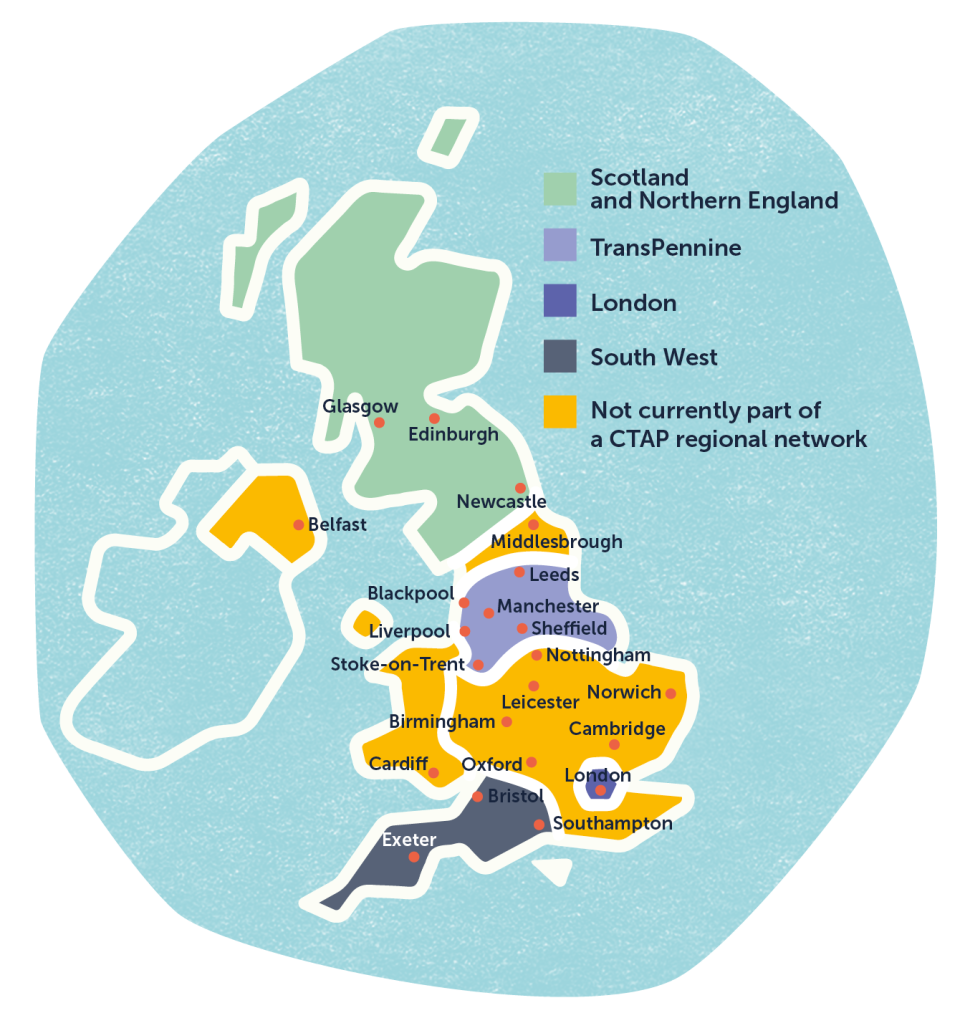
The TransPennine Regional Network runs alongside our existing London, Scotland and Northern England, and South West regional networks. Together, these four CTAP networks cover geographically significant areas of the UK.
Centres within our regional networks meet regularly with the aim of working together more closely, sharing their knowledge about running CF studies and making it easier to refer people for research opportunities in other centres.
Alongside our regional networks, CTAP has set up referral pathways that connect all UK CF centres to encourage CF centres to refer people for research opportunities at other centres.
To date:
- more than 80 people with CF have been referred between centres to take part in research
- more than 96% of recorded referrals have taken place between centres within a CTAP regional network.
Find out more about our CTAP centres
Making research opportunities available to everyone
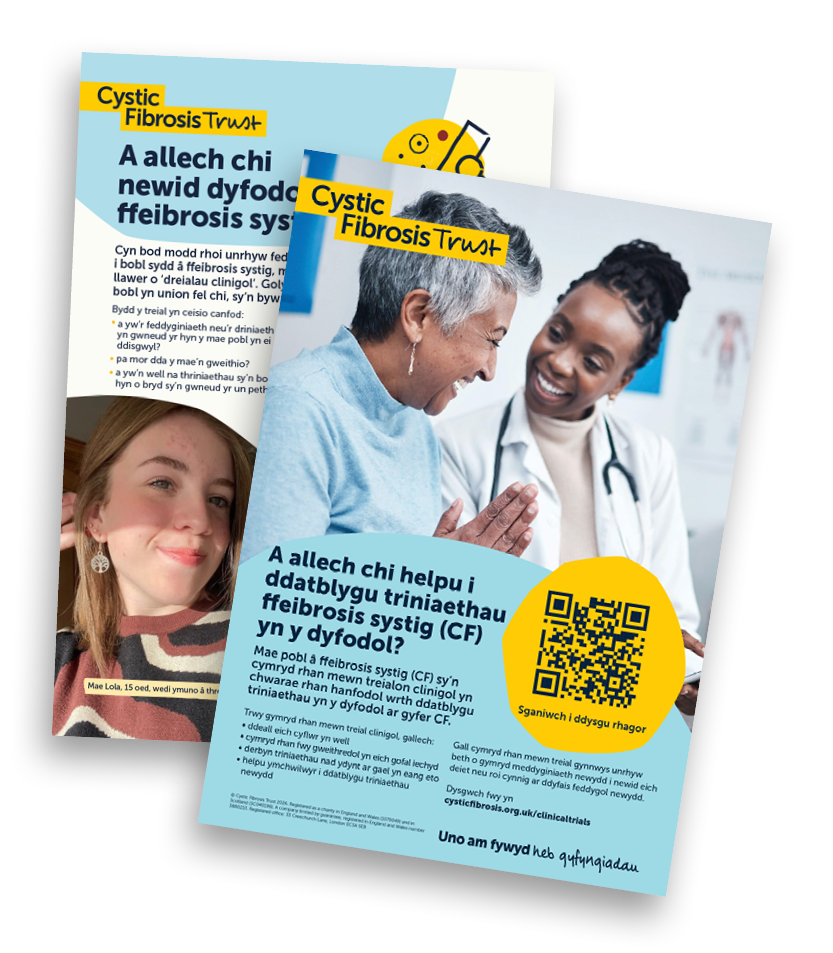 Our Diversity in Clinical Research project aims to:
- improve engagement with groups who are under-represented in CF research
- make sure everyone with CF has fair and equitable access to research opportunities.
We work with organisations that specialise in inclusion, diversity and equality in health research to make sure our approach is based on evidence and the needs of our diverse community.
A snapshot of key activities in the last year:
- translating clinical research resources into Welsh, Arabic, Urdu and Polish
- supporting a CF in South Asian Families community café hosted by the Manchester CF centre, with a recent CF Live event being held with support from the Trust
- advocating for standardised payments and appropriate reimbursement for trial participants.
CF STORM study: the impact of a collaborative network
CF STORM was an important study that aimed to find new ways to reduce treatment burden for people with CF. It ran from Spring 2021 to Summer 2024.
It set out to understand whether people on Kaftrio could safely stop taking mucoactive nebuliser (inhaled) medicines without harming lung function. This is something that impacts the daily lives of many people with CF.
- 591 children and adults with CF joined the study
- 40 UK CF centres took part – more than double the number of centres usually open for a CF study.
CF STORM created evidence that will support conversations between people with CF and their clinical teams about their treatment plans. Find out more about early results from CF STORM.
Initial discussions were held with the community to understand how we could really address reducing treatment burden. And from that, CF STORM was developed.
– Lorna Allen, Involvement Manager
Its success highlights the value of the CTAP network, whose national reach and established trial infrastructures helped open the study and make it possible for people to join from across the whole of the UK.
Thank you
CTAP’s achievements wouldn’t be possible without the support of our whole network, from our CTAP centres and trial coordinators to people with CF and their families all supporting CF research.
Thank you to everyone who has supported CF research over the last year.
Take part in CF research
Find out what's involved in clinical trials and whether taking part in a trial is right for you.
Join our Involvement Group
Share your knowledge and experience of CF to help shape future clinical studies.
Make a donation
Help fund groundbreaking new research into the causes of and new treatments for CF