
This article is more than 4 years old
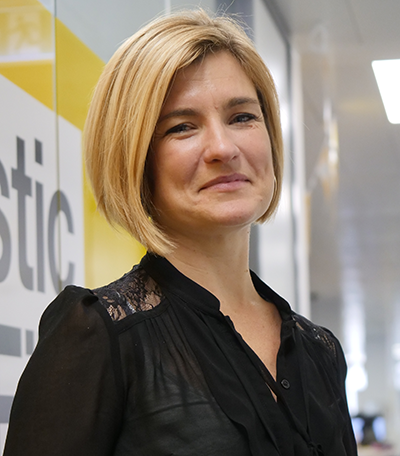
“For CF research there are lots of interesting puzzles to solve”: Dr Lucy Allen, Director of Research

Charlotte: Do you think that your priorities as a researcher are different from the priorities of someone with CF?
Lucy: There is the potential for that difference, between the research priorities of a scientist and someone with CF. When I was working in the lab earlier in my career I’d always want to know the ‘so what’ of my research. For CF research there are lots of interesting puzzles to solve, but there are things to focus on that have the potential to give the CF community answers to questions that are important to them sooner. You mention in one of your later questions, that the community are starting to survive for longer, which is fabulous. But then you get the questions regarding the impact of that longevity in terms of health and wellbeing, and how do we as a research community make sure that we’re thinking about these issues now.
Charlotte: My parents were told never to use the word cure, now we’ve made so much progress is it reachable?
Lucy: Everybody’s striving for a cure, but everyone recognises that that might be different for different people. As we’ve seen for those taking the modulator treatments, people have very different experiences. We also need to think about those who can’t benefit from modulators, as they have very different health needs to the population that can take them. So reflecting on the fact that CF is a complex disease, and there’s a lot of individual variation, we might not find that one blockbusting cure that everyone would like to see. We also need to think about the immediate needs of people with CF as well as the long-term goals of that cure. Helping us to understand better those immediate needs are where the research priority refresh project is going to be really important. It will allow people to tell us exactly how they’re feeling right now, and therefore what their research priorities are, whether they are to address immediate health needs or more longer-term priorities.
Charlotte: There seems to be a lot of research into lung infections caused by the bug non-tuberculous mycobacteria (NTM), is that because it has always been there? Or is it a new bug on the scene?
Lucy: In the US in the late 1990s, NTM started to become a more common bug within the CF community, and then in the UK you could start to see the increasing rates of infection. When we got the top 10 research priorities in 2017, treatment for NTM infections was the third priority on the list. In response, researchers are looking into the best treatment regimes to deal with NTM, funded by the Trust and internationally. It demonstrates how powerful these research priority exercises are in identifying something that’s bubbling up within the CF research community.
Charlotte: Everyone’s CF is going to be so different; reactions aren’t going to be the same and treatments aren’t going to be the same. What do you think will happen in the long run?
Lucy: With CF there’s so much happening in the body, and treatment and management needs to be on an individual level. For example, one person doesn’t do the same amount of exercise as the next person, or one person may stick to their meds more than someone else. All of those questions can’t be answered in one study. Researchers are asking one question at time, as they are with the CF STORM study, which aims to find out if stopping certain daily mucoactive nebulisers is safe for people taking Kaftrio. (You can find out more about how to take part in the CF STORM study here). It’s likely that there will be similar studies to this, ‘if I stop taking that, what happens?’ or ‘if I do more of one thing, is it better than another?’. Eventually we’ll have enough evidence to develop some guidance around them.
The second QuestionCF survey will be launched in mid-May. Please keep an eye on our website and social media channels for more details coming soon.
You can read more about the QuestionCF Priority Refresh project in the latest edition of CF Life magazine.

Break the ice with #CFTruths
Help others understand what everyday life is like for people with CF.