
This article is more than 3 years old
Under the microscope: Investigating new ways to treat Aspergillus fumigatus in people with CF
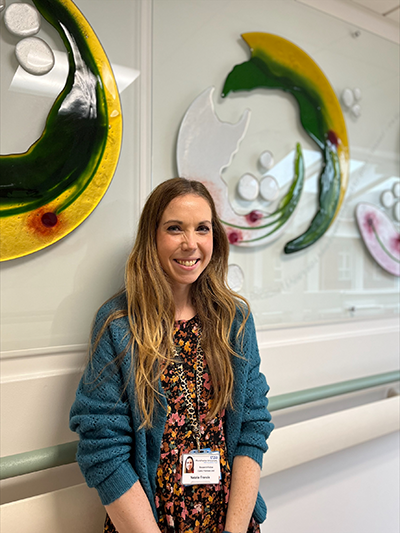 Hi Natalie, can you start by telling us how Aspergillus fumigatus affects the lungs of people with CF and how many people are affected?
Aspergillus fumigatus is found in the environment, in soil and warm, moist environments, so we breath it in every day. As an opportunist bug, it settles in mucus trapped in the airways, which is the perfect environment for it to survive.
Studies suggest that 25-50% of adults with CF are growing Aspergillus fumigatus. Most people are not troubled by the fungus. But for some, the bug can cause short or long term infection (which may give symptoms of a flare up of lung health (an exacerbation) ) or an allergic reaction within the airways (which may give symptoms such as wheezing, and shortness of breath).
How is the UK CF Registry helping you to track Aspergillus fumigatus infection in people with CF?
I have been working with colleagues at the Trust who manage the UK CF Registry, looking at information that is entered into it about Aspergillus fumigatus infection. We have added new data fields so that we can now collect detailed information about the effects of Aspergillus fumigatus infection, for all people with CF in the UK who consent to their data being used by the Registry. For example, we can characterize the type of Aspergillus infection or allergy.
This not only allows me to gain a snapshot of infection rates across the UK, but moving forward will allow long term monitoring, and enable us to identify any patterns, such as rapid increases in infection rates, or regional variation. It also provides us with further information about risk factors and treatment.
How are people with CF involved in your research?
People with CF who have agreed to take part in our research donate blood, urine and sputum/cough swab samples for analysis. They also give their permission for us to see some of their medical records, such as their spirometry results (a test used to diagnose and monitor certain lung conditions) and the medicines they take, including the number of antibiotics.
What happens to the samples people with CF donate?
We use the samples to better understand how airway disease caused by this fungus affects people with CF, and how the body’s defense system (the immune system) interacts with the fungus. This information will help us find better treatments for it.
Some of the samples are processed by our laboratory in the hospital. Here we process their blood samples to look for markers that show how their immune system is working to fight Aspergillus fumigatus, and for the presence of the bug in their sputum or cough swabs. In particular, I am looking at whether cough swabs, rather than sputum samples, can be used to identify growth of Aspergillus fumigatus.
How is the Trust’s Clinical Trial Accelerator Platform (CTAP) network helping with this research?
People with CF in Manchester, London, and Exeter are taking part in our research study. There is a lot to organize in the local hospitals before we can begin asking people to take part. The Trust’s Clinical Trials Accelerator Platform have been incredibly helpful with the set-up of our study at each of the sites. In Manchester, our CTAP nurses have helped us with recruitment to the study, as well as setting it up.
It’s important we understand more about how the immune systems of people with CF interact with Aspergillus fumigatus to identify who is more susceptible to it and to find new drugs to treat it.
Natalie Francis
What difference could this research make to the CF community?
For a certain number of people with CF, Aspergillus fumigatus infections are debilitating and difficult to treat, for example, people with CF might need to take antifungals for months at a time. Current treatments also have multiple side effects. For example, steroids which are used to treat Allergic Bronchopulmonary Aspergillosis – the allergic airway response to Aspergillus fumigatus – are poorly tolerated by many people. It’s important we understand more about how the immune systems of people with CF interact with Aspergillus fumigatus to identify who is more susceptible to it and to find new drugs to treat it.
This week is World Antimicrobial Resistance Awareness Week, why is it important we raise awareness of antimicrobial resistance?
As with bacteria, fungal species can become resistant to the medication we try to treat them with. They do this by evolving their genetics overtime to allow them to survive despite the antimicrobial treatment. Fungal resistance to antimicrobials has come about not only through widespread use of antifungal medicines, but also from the use of antifungal pesticides in agriculture. We need to be thinking several steps ahead and ensuring that we only treat Aspergillus fumigatus when it is necessary, and to find alternative ways of treating the disease such as immunotherapies.
And finally, what do you love most about what you do?
I am thoroughly enjoying focusing on research, to advance knowledge and hopefully improve CF care in the long-term. I have always enjoyed working with people with CF and as a paediatrician now working with adults while I undertake this research, it is lovely to see so many familiar faces of patients who I have known from their days in the children’s hospital.
Let’s get to a life unlimited for everyone with CF – faster.
Our goal is a day where there are effective treatments for everyone with CF. We need life-changing treatments, treatments that minimise harmful impacts like hearing loss, treatments that work for every person with CF – and we need them now. But we can’t get there without your support.
There are lots of ways you can support us this festive season, from playing our raffle through to doing some festive fundraising or buying Christmas cards and gifts for a loved one from our online shop.
Will you unite with us and the entire CF community this festive season so we can keep funding our vital work?

Join together to make amazing things happen
Unite with us this festive season for a better life for everyone with CF.